
1)Advancing Eco-Friendly Commuting at BSRU
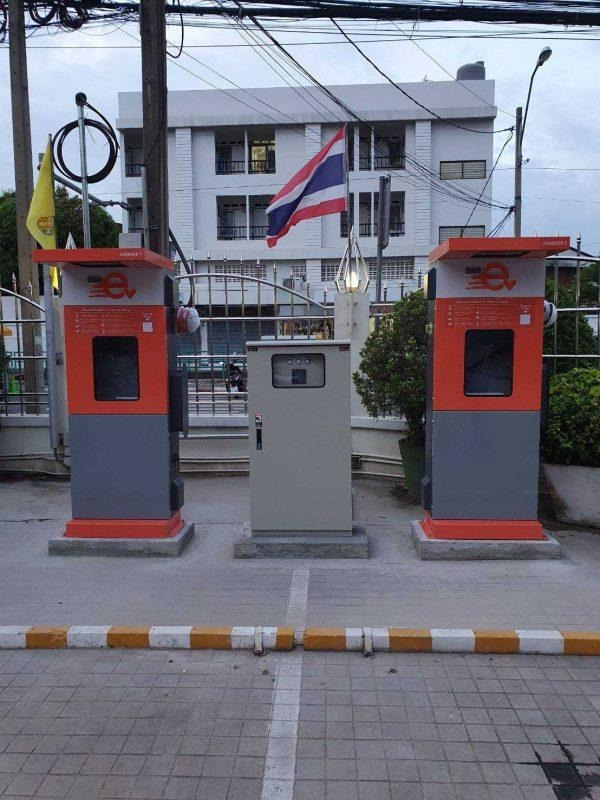
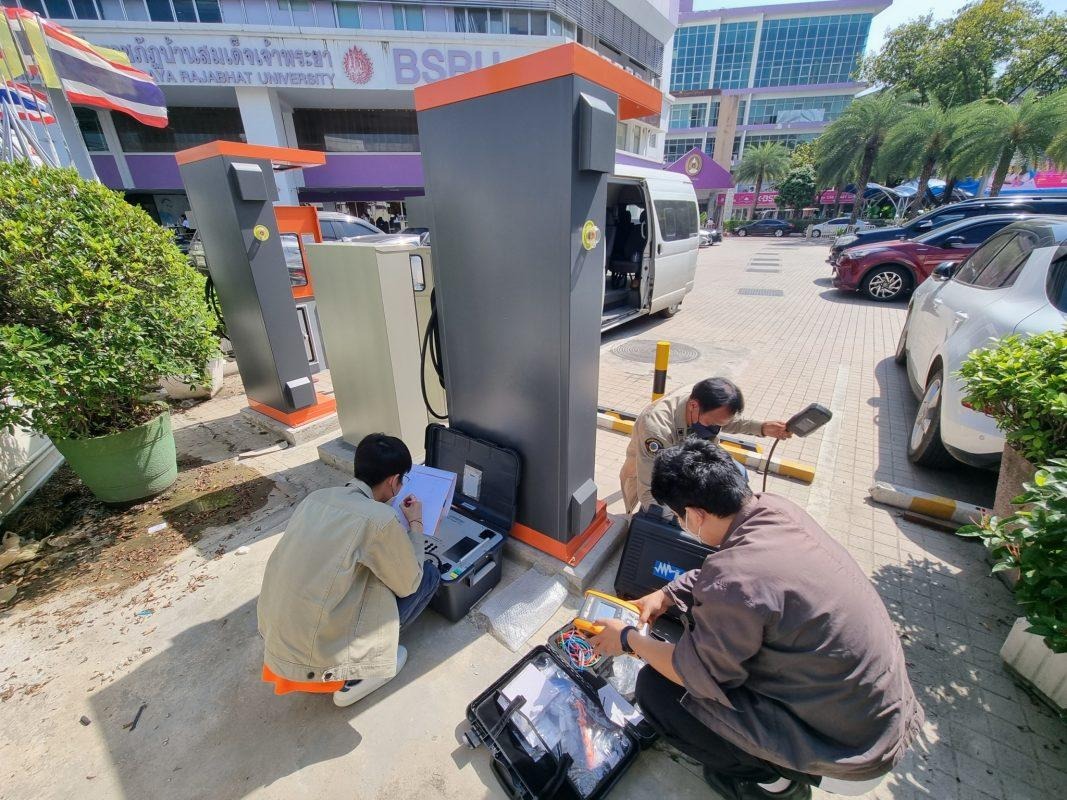
At BSRU, our commitment to sustainability is evident through our policy on zero emission vehicles. In line with our dedication to reducing carbon footprint, we have taken steps to promote eco-friendly transportation on campus. To support electric vehicle (EV) usage, we’ve installed a charging station, providing convenient access for our university community. Furthermore, in our effort to lead by example, the university uses three electric vehicles to transport students and personnel across campus,and also promotes the use of bicycles, thus reinforcing our commitment to a more sustainable future.
Electric Vehicles and Charging Stations
BSRU actively promotes the use of zero-emission vehicles as a key part of our sustainability strategy. We’ve installed an EV charging station on campus, supporting electric vehicle usage and facilitating a greener campus. Additionally, BSRU operates three electric vehicles to transport students and staff within campus, and we encourage bicycle use as an alternative, all of which significantly reduce our carbon footprint and model eco-friendly choices.
Shuttle Services for Enhanced Accessibility and Sustainability
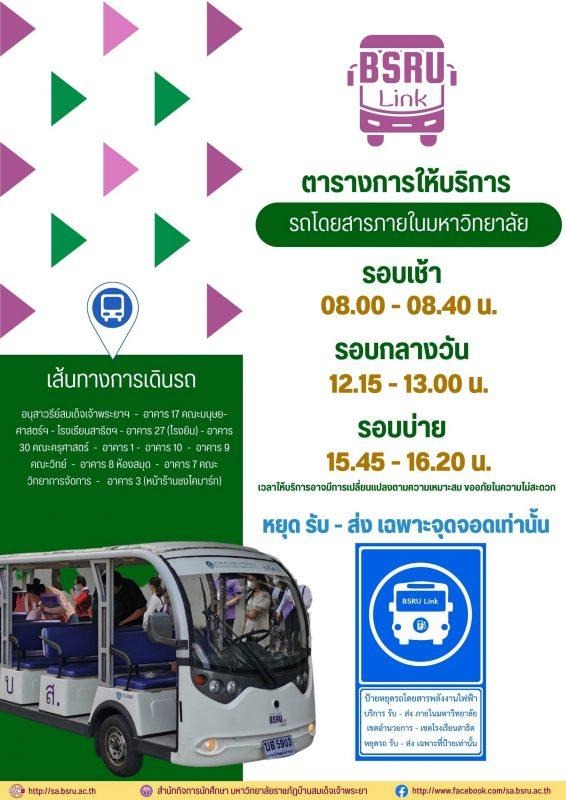
The university operates three shuttle buses that facilitate travel within campus, especially aiding those with mobility challenges. Though our campus is compact, providing free and accessible shuttle services encourages students and staff to opt for public transport over personal vehicles. With a prime location just five minutes from Itsaraphap Metro Station and several local bus routes (Nos. 208, 4, 39, 40, 7ก, and 82), BSRU is well-connected to sustainable commuting options, further supporting eco-friendly transportation habits.
Promoting Carpooling and Public Transport during Events
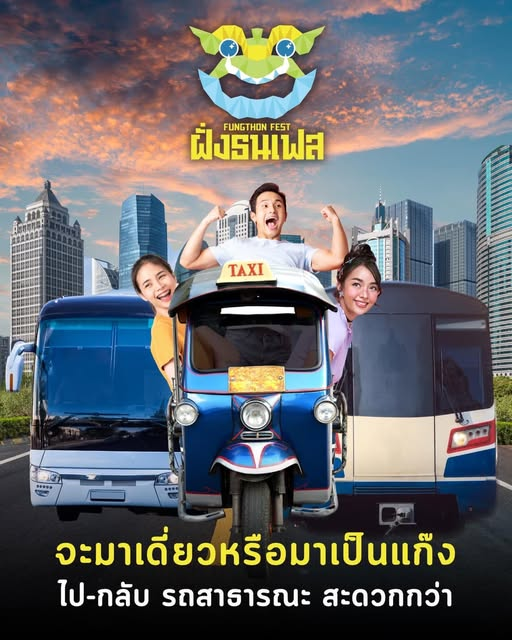
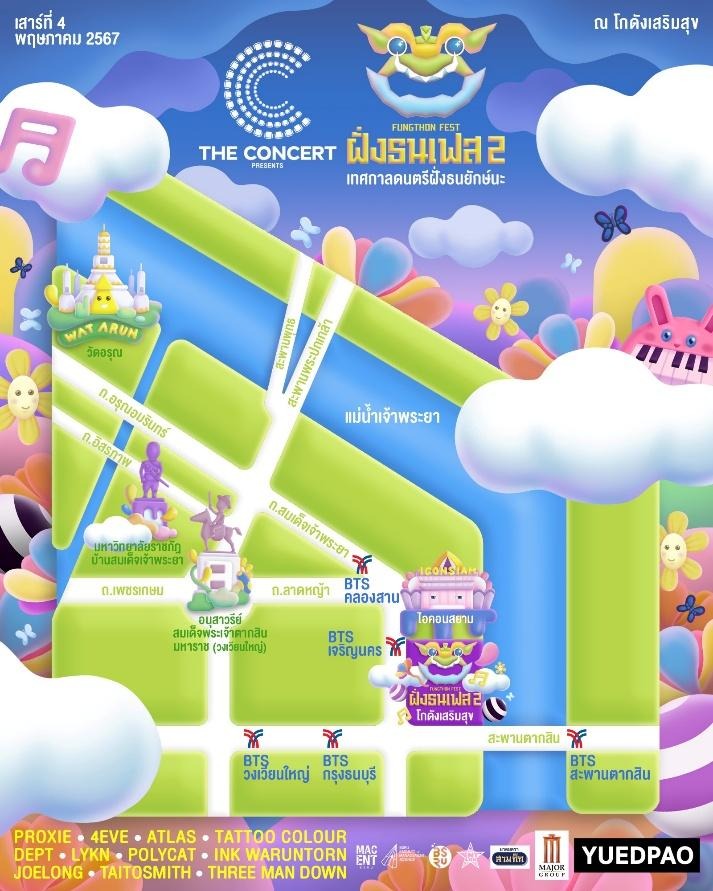
BSRU promotes carpooling and the use of public transportation during major events, such as Fungthon Fest, to limit the number of private vehicles on campus. This approach helps alleviate traffic congestion, lower emissions, and foster sustainable commuting habits among participants. By integrating this model into event planning, BSRU not only reduces environmental impact but also encourages the wider community to adopt greener transportation practices.
Encouraging Public Transport Use for the Royal Graduation Ceremony
For the Royal Graduation Ceremony, BSRU is encouraging attendees to use public bus transportation instead of personal vehicles to ease parking constraints and reduce environmental impact. This initiative addresses parking limitations, promotes sustainability, and exemplifies our commitment to creating a more efficient, eco-friendly campus environment.
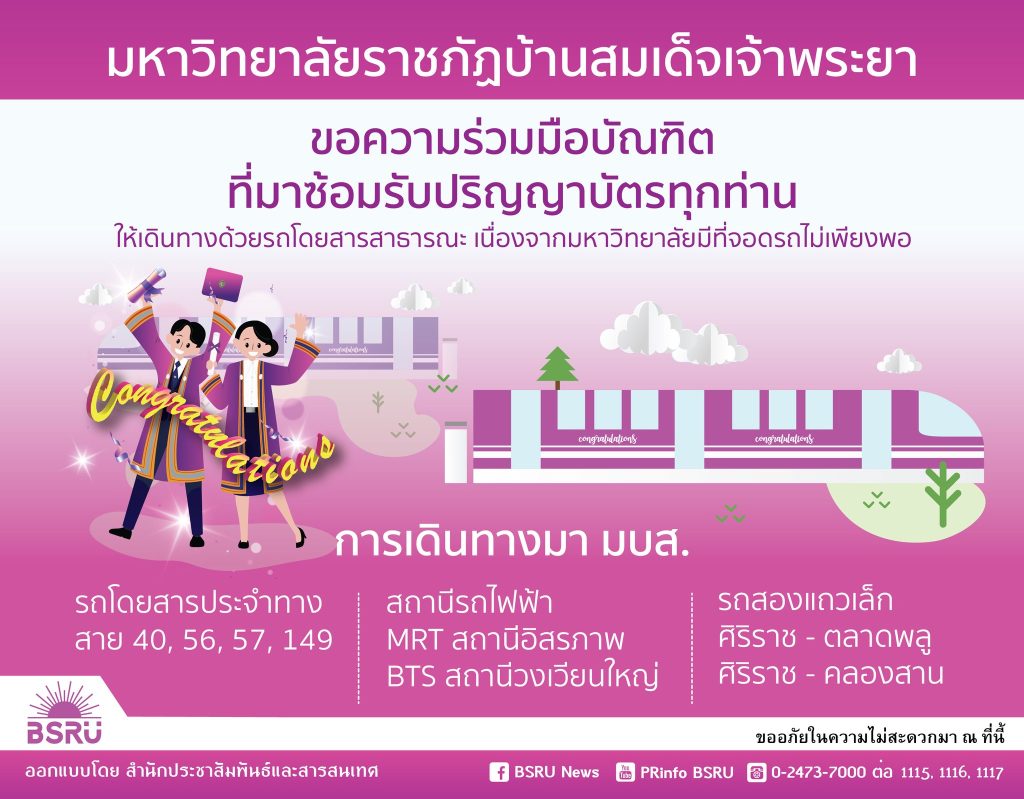
Through these sustainable commuting practices, BSRU continues to demonstrate leadership in fostering sustainable urban infrastructure and promoting a greener future for all.
Encouraging Electric Bikes and Bicycles
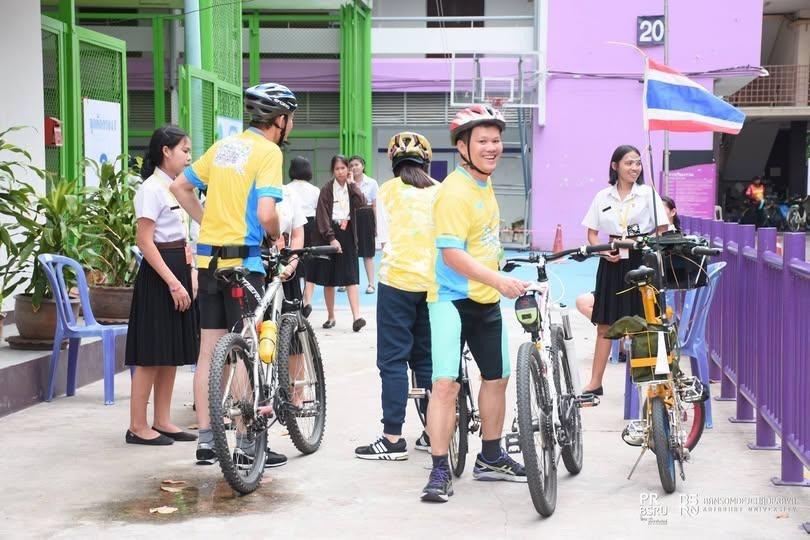
As part of its commitment to sustainable transportation, BSRU supports and promotes bicycle use as an eco-friendly alternative for commuting and tourism. Initiatives such as the collaboration with Ko Van Kessel Bangkok Tours, offering guided cycling tours, highlight the benefits of bicycles for reducing carbon emissions, easing traffic congestion, and fostering a healthier lifestyle.
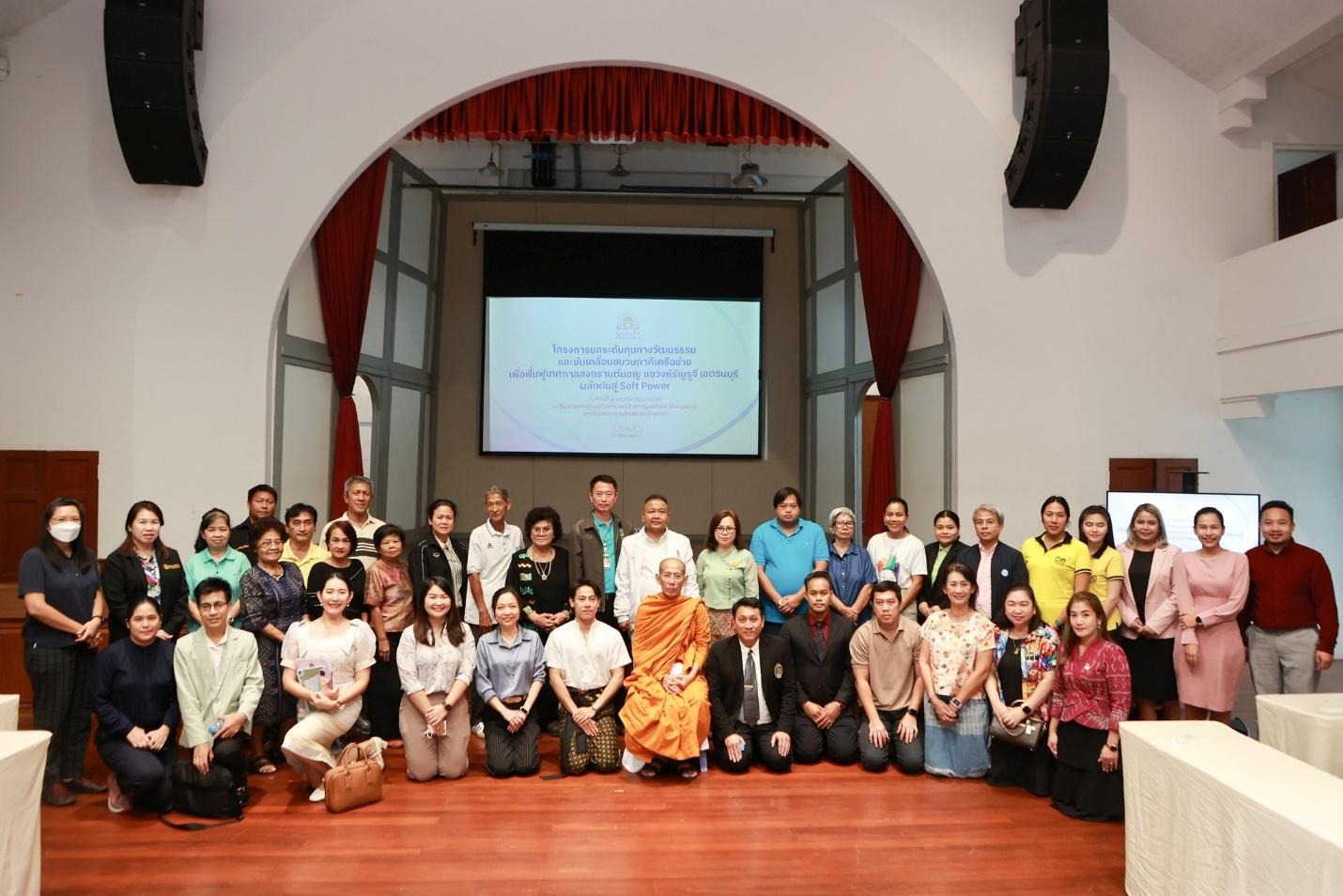
By integrating cycling into community and cultural events, BSRU encourages greener mobility choices that align with its vision of a sustainable and environmentally conscious campus and city.
2. BSRU’s Commitment to Sustainable Practices: Fostering a Sustainable and Eco-Friendly Campus
As part of our commitment to SDG 11: Sustainable Cities and Communities, BSRU has implemented a range of sustainable practices and transportation policies aimed at reducing our campus’s environmental impact and fostering a greener, more efficient commuting environment for our students, faculty, and staff.
Parking Policy for Reduced Congestion
To address campus parking congestion, BSRU has restructured its parking policy to minimize the use of private vehicles on campus. A large volume of faculty, staff, and visitors had previously contributed to overcrowding. The revised policy reserves parking exclusively for vehicles with university-issued entry and exit stickers, which restricts parking privileges to officially affiliated personnel. This new policy, introduced alongside controlled entry and exit points at various campus buildings, ensures that only those with approved permits can access parking facilities, optimizing space usage and reducing congestion. To discourage unauthorized overnight parking, staff are required to pay a 15,000-baht annual fee for extended parking. Similarly, students have designated time-limited parking options, while a separate building with free motorcycle parking encourages eco-friendly alternatives.
 ประกาศการนำรถผ่านเข้าออกมหาวิทยาลัย
ประกาศนโยบายและแนวทางการจอดรถจักรยานยนต์
Measuring and Managing Carbon Emissions from Campus Vehicles
BSRU actively monitors the carbon footprint generated by cars and motorcycles on campus, aiming to progressively reduce it. Through a systematic calculation of total CO₂ emissions from vehicles, we analyze fuel consumption and carbon output as a way to track and manage environmental impact.
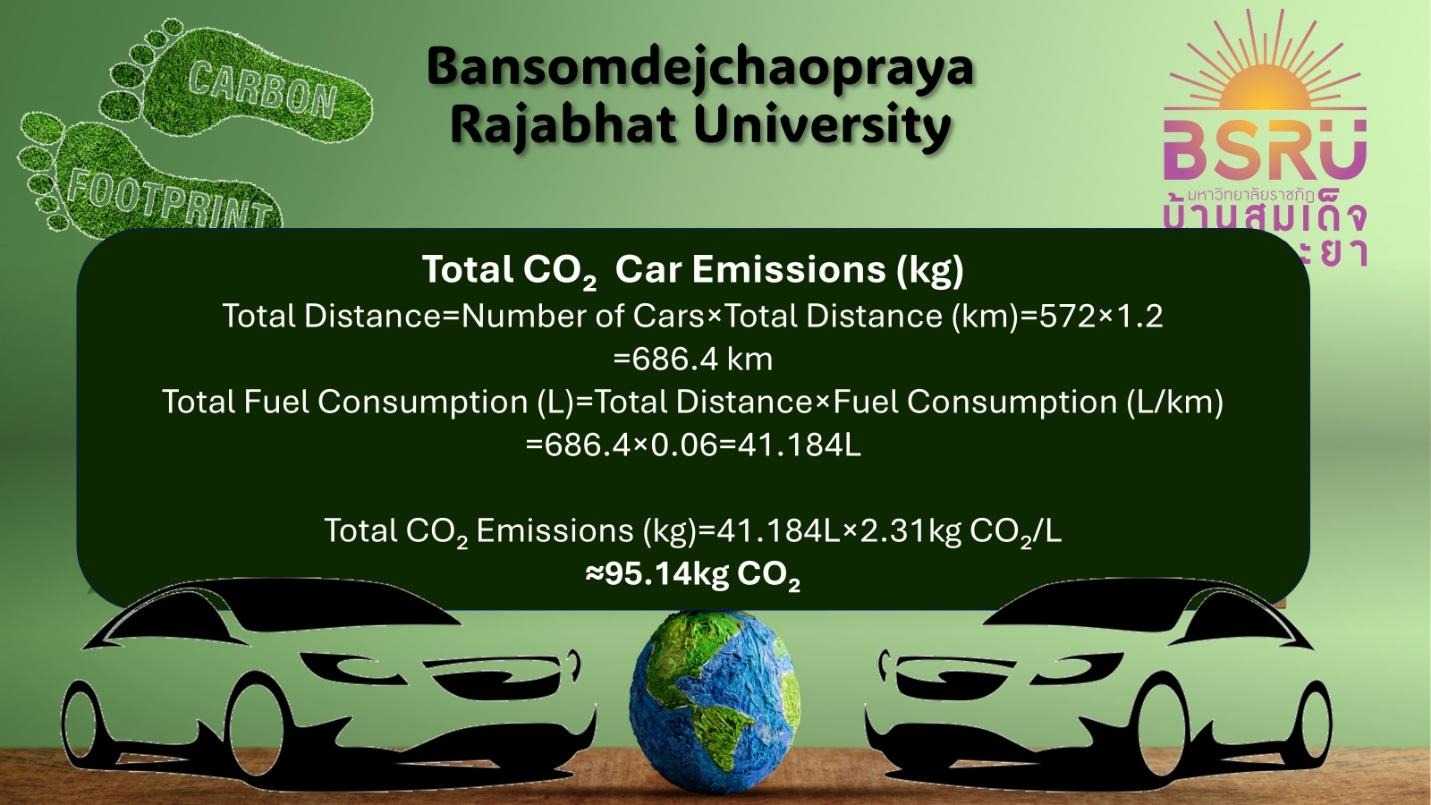
Car Emissions: Annual monitoring revealed that 512 cars on campus emit approximately 95.14kg CO₂, with fuel consumption calculated based on an average annual travel distance.
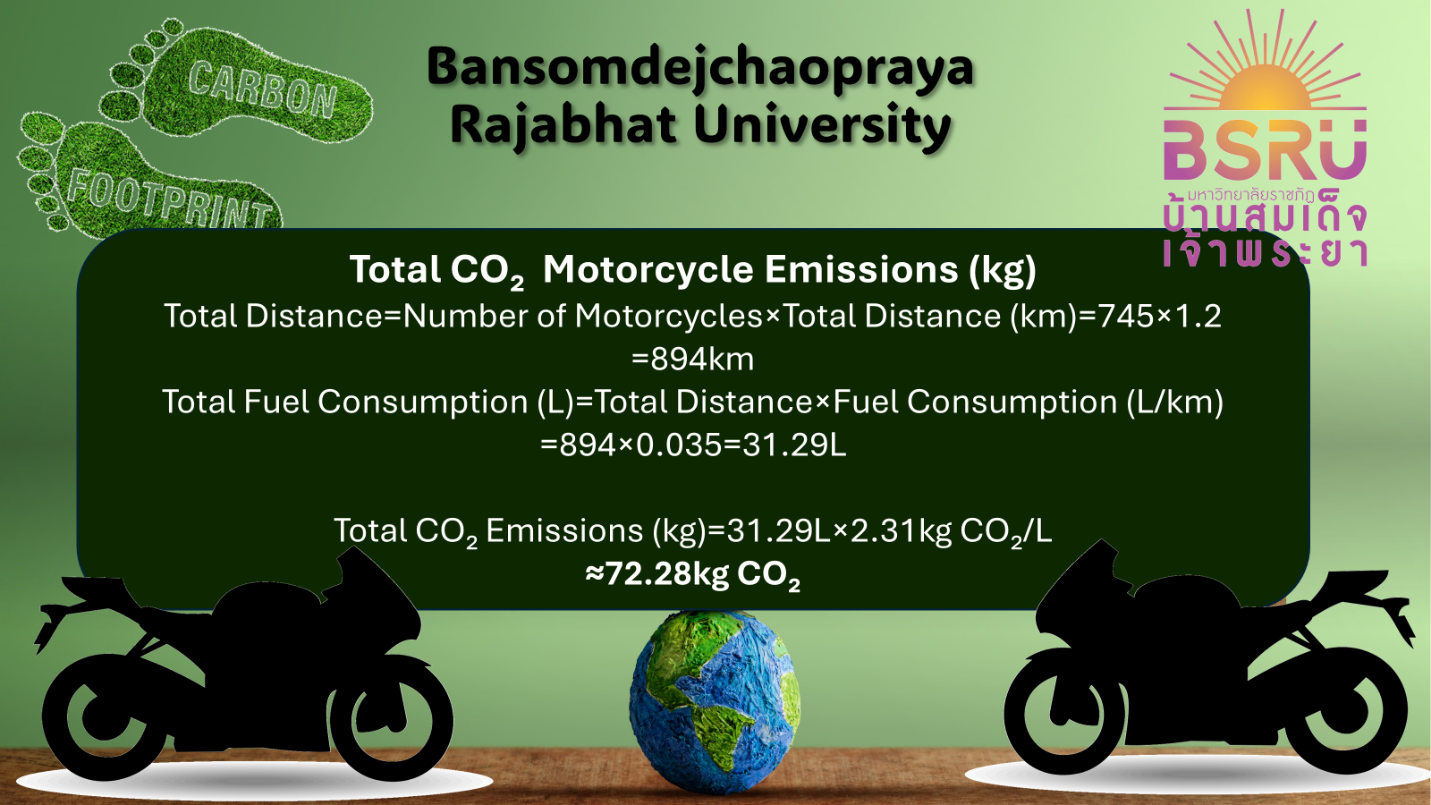
Motorcycle Emissions: Likewise, with 745 motorcycles commuting daily, CO₂ emissions are estimated at 72.28kg CO₂ annually, promoting awareness of these emissions and encouraging the use of alternative transportation.
These efforts highlight BSRU’s commitment to encouraging sustainable commuting and minimizing environmental impact. By cultivating a culture of green transportation and mindful resource use, the university advances its goal of building a campus that is both sustainable and environmentally responsible.