Measure and Track Applications and Admissions of Underrepresented Groups
In 2024, Bansomdejchaopraya Rajabhat University (BSRU) continued to strengthen its monitoring of applications and admissions among underrepresented and potentially underrepresented groups, reaffirming its commitment to equitable access and inclusion in higher education. The university’s data tracking covers essential demographic dimensions such as gender, religion, household income, and disability status. This ongoing effort is aligned with SDG 10 (Reduced Inequalities), serving as a framework for assessing the university’s progress in promoting diversity and equal opportunity.
1. Gender Representation in Applications and Admissions
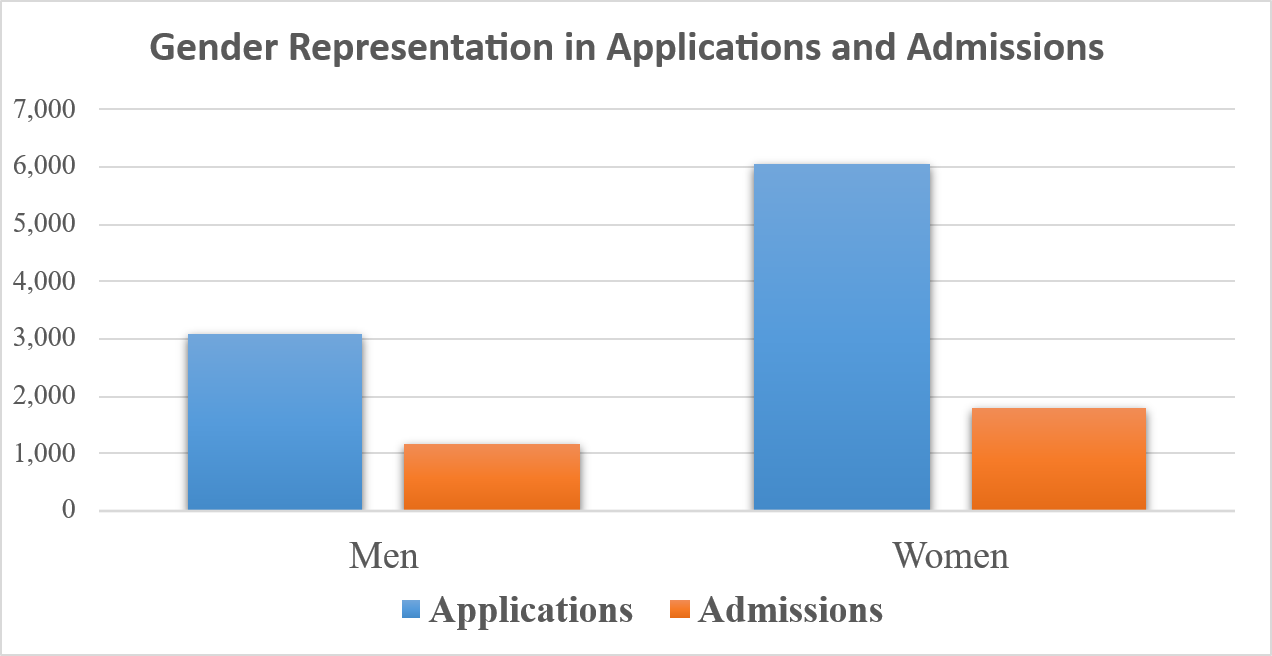
BSRU’s 2024 admissions data reflects its continued attention to gender representation. Of the 3,094 male applicants, 37.91% were admitted, while 30.02% of the 6,043 female applicants gained admission. This shows that although women applied in far greater numbers, men had a relatively higher acceptance rate. At the same time, women still represented the majority of admitted students overall, accounting for 60.72% of the intake. This balance demonstrates BSRU’s commitment to inclusive admissions practices, ensuring both male and female applicants have meaningful access to educational opportunities.
2. Tracking Muslim Student Admissions
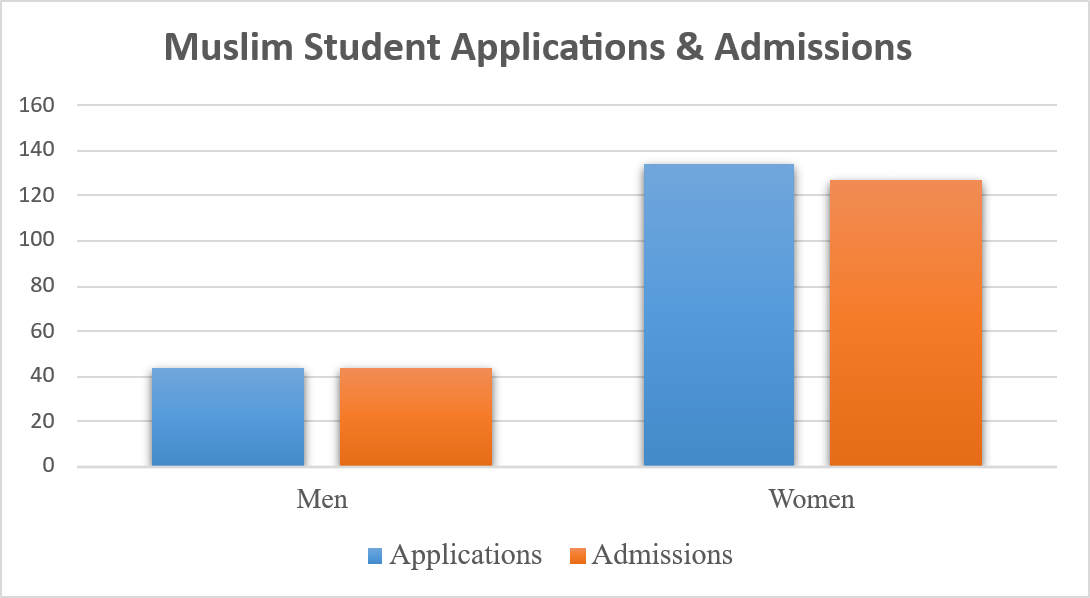
BSRU closely monitored applications and admissions of Muslim students in 2024, reflecting its commitment to supporting religious minorities in Thailand. That year, 178 Muslim students applied, with 171 successfully admitted, representing a high overall acceptance rate of 96.07%. Male applicants achieved a 100% admission rate, while female applicants were admitted at 94.78%. These figures highlight the university’s inclusive admissions practices and its dedication to ensuring equitable access for students of diverse religious and cultural backgrounds.
3. Household Income and Access to Education
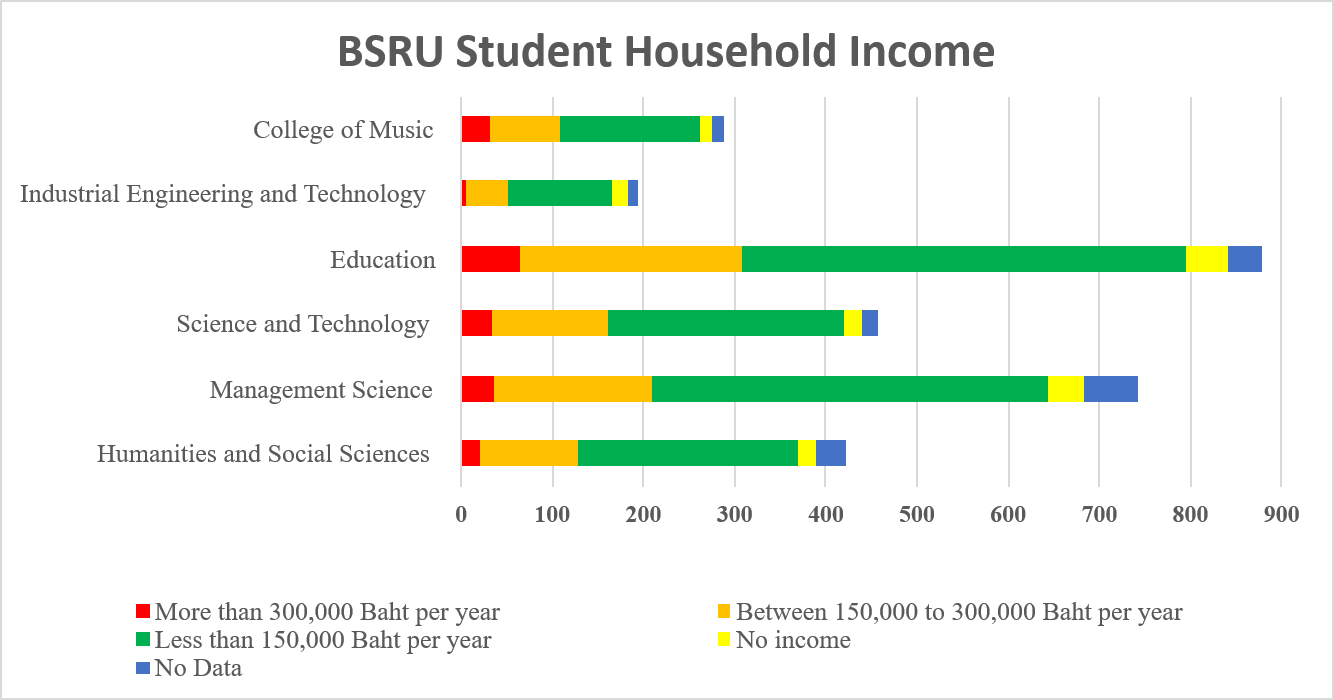
BSRU’s monitoring of student admissions by household income highlights its commitment to widening access for low-income students. In 2024, among 2,980 full-time equivalent (FTE) first-year students, 56% came from households earning less than 150,000 Baht per year, underscoring the university’s role in supporting students from financially disadvantaged backgrounds. A further 5% reported having no household income, reflecting BSRU’s efforts to extend educational opportunities to the most economically marginalized. Through systematic tracking of income levels, the university ensures that its programs remain accessible and inclusive for students from diverse socioeconomic backgrounds.
4. Support for Students with Disabilities
BSRU provided detailed tracking of students with disabilities, further demonstrating its commitment to inclusion. The data reveals that 34 students with disabilities were admitted, representing various types of disabilities including physical impairments (7 students), hearing impairments (8 students), visual impairments (3 students), learning disabilities (3 students), intellectual disabilities (5 students), mental health conditions (2 student), and autism (10 students). The university’s efforts to admit and support students with a wide range of disabilities reflect its dedication to inclusive education practices and equitable access for all students, regardless of physical or cognitive challenges.
BSRU’s comprehensive efforts to measure and track applications and admissions from underrepresented groups—including students from low-income families, ethnic minorities, and students with disabilities—reflect a strong commitment to SDG 10: Reduced Inequalities. The institution’s systematic data collection supports equitable access, though increased public availability of this data would further enhance transparency and strengthen its commitment to inclusion. For more information, please read Academic Affairs and Registration detailed analysis:
 AAR Data