In 2024, Bansomdejchaopraya Rajabhat University (BSRU) continued to play a pivotal role in providing expert guidance and academic input across local, regional, and national levels. At the local level, BSRU collaborated with Bangkok districts to support the development and adoption of district health charters, promoting participatory public policy and community well-being. Regionally, the university contributed to initiatives such as the Bangkok Health Assembly and the “One Village, One Thai Chef” program, advising on public health, sustainable urban development, and cultural soft power. At the national level, BSRU engaged with the National Health Commission Office, participated in the 17th National Health Assembly, and collaborated on initiatives like the Muaythai League Thailand 2025, providing expertise to inform policies that advance public health, cultural diplomacy, and evidence-based governance. Through these efforts, BSRU reinforces inclusive, participatory, and accountable decision-making in line with SDG 16.
1. BSRU’s Academic Contribution to the Development of District Health Charters in Bangkok
In 2024, Bansomdejchaopraya Rajabhat University (BSRU) provided expert academic support to local public health policymaking by participating in the District Health Assembly for Taling Chan and Phra Khanong Districts, Bangkok. Acting on behalf of the university, Assistant Professor Dr. Kanakorn Sawangcharoen, together with Dr. Surasak Krueahong, contributed as academic advisors in the development and adoption of the District Health Charter.
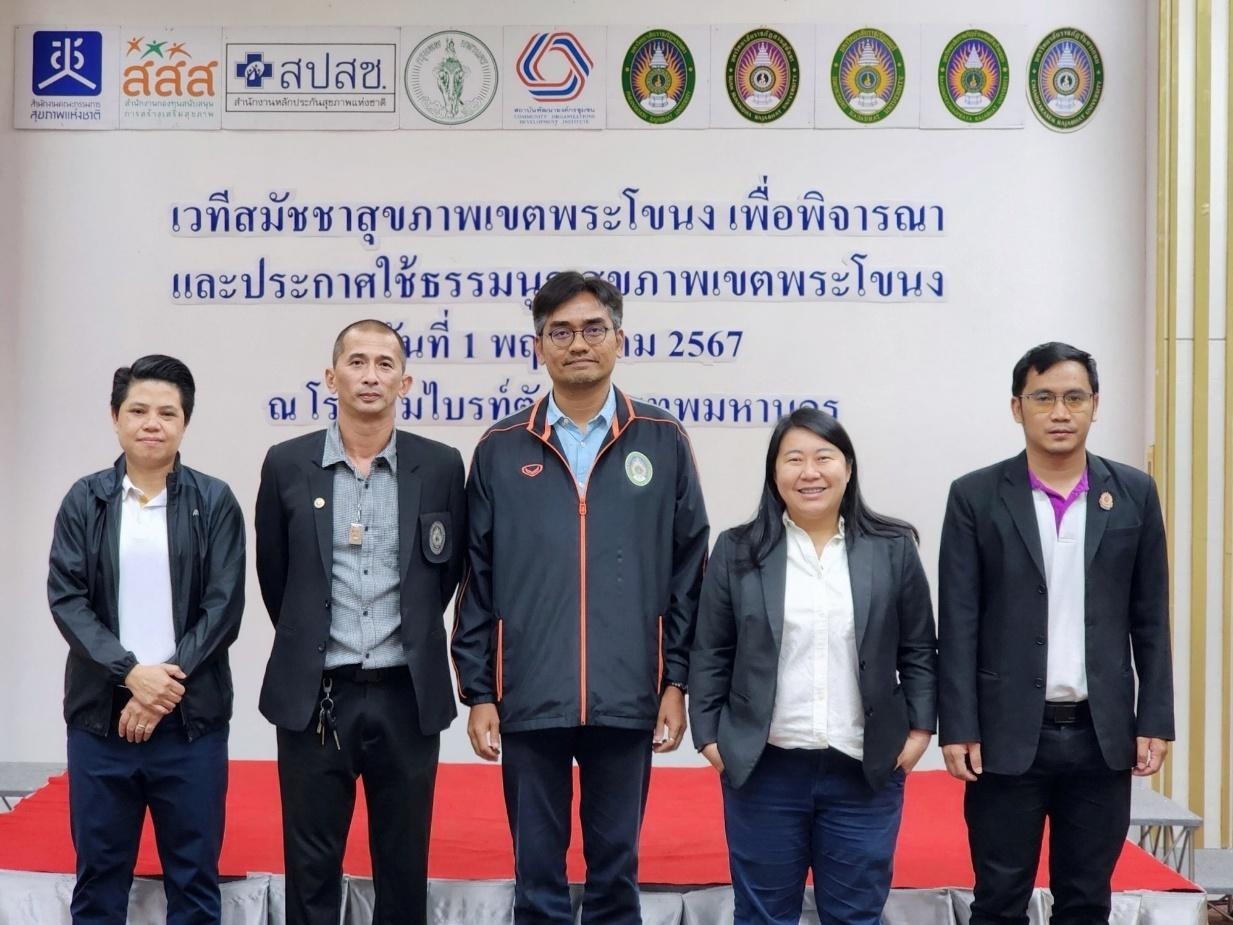
The assembly aimed to promote participatory public policy development and strengthen mechanisms for community health and well-being in Bangkok. BSRU’s involvement included providing evidence-based input and expert commentary on the formulation process, in collaboration with the National Health Commission Office (NHCO), the Bangkok Metropolitan Administration (BMA), and community representatives.
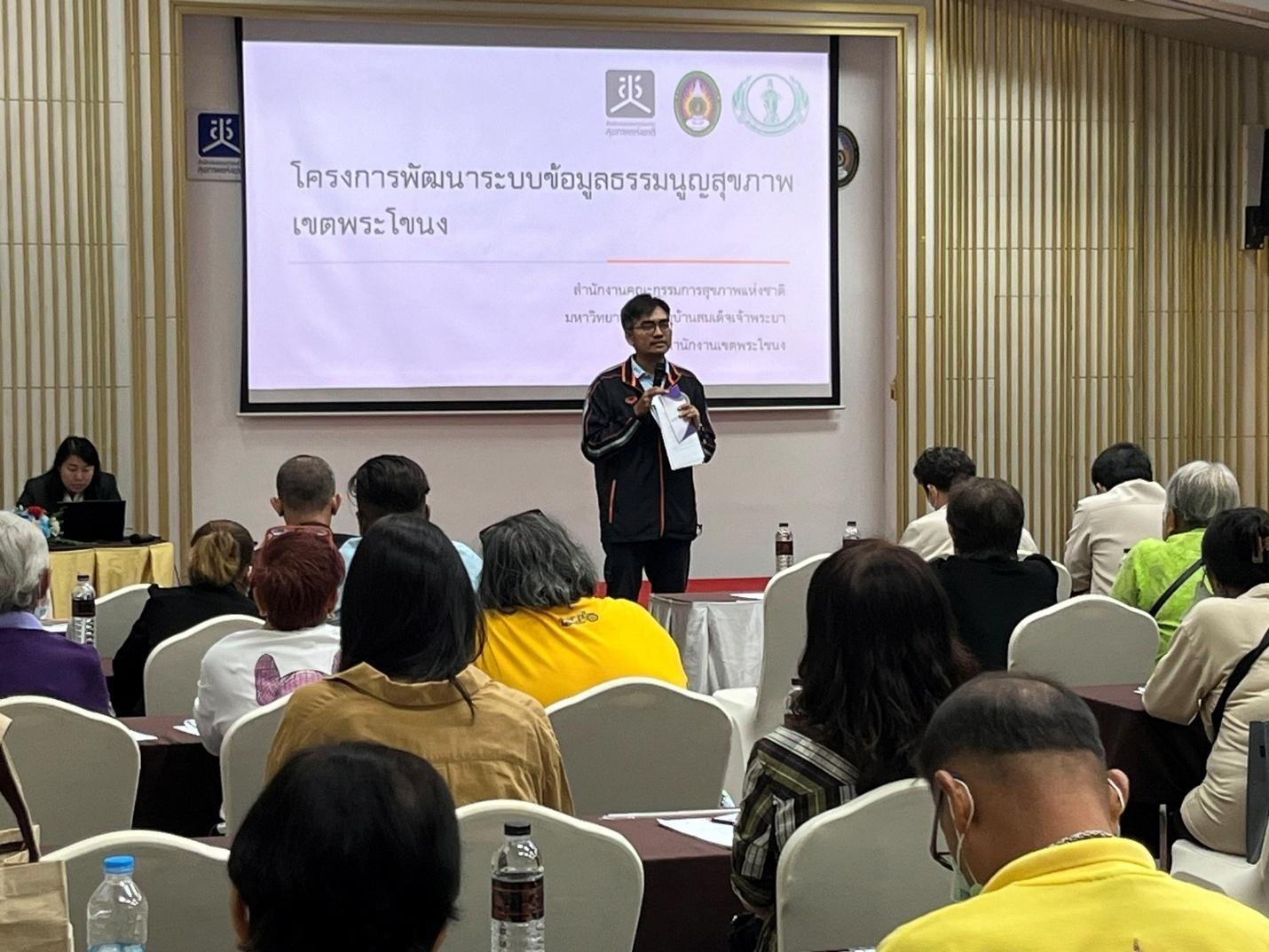
Through this initiative, BSRU played an advisory role in shaping local governance and health policy processes, supporting SDG 16 by fostering inclusive, participatory, and evidence-informed decision-making at the local level. The university will continue working with NHCO and district offices in the next phase of the project to establish district health charters across all 50 Bangkok districts and to extend health governance practices within the university community.
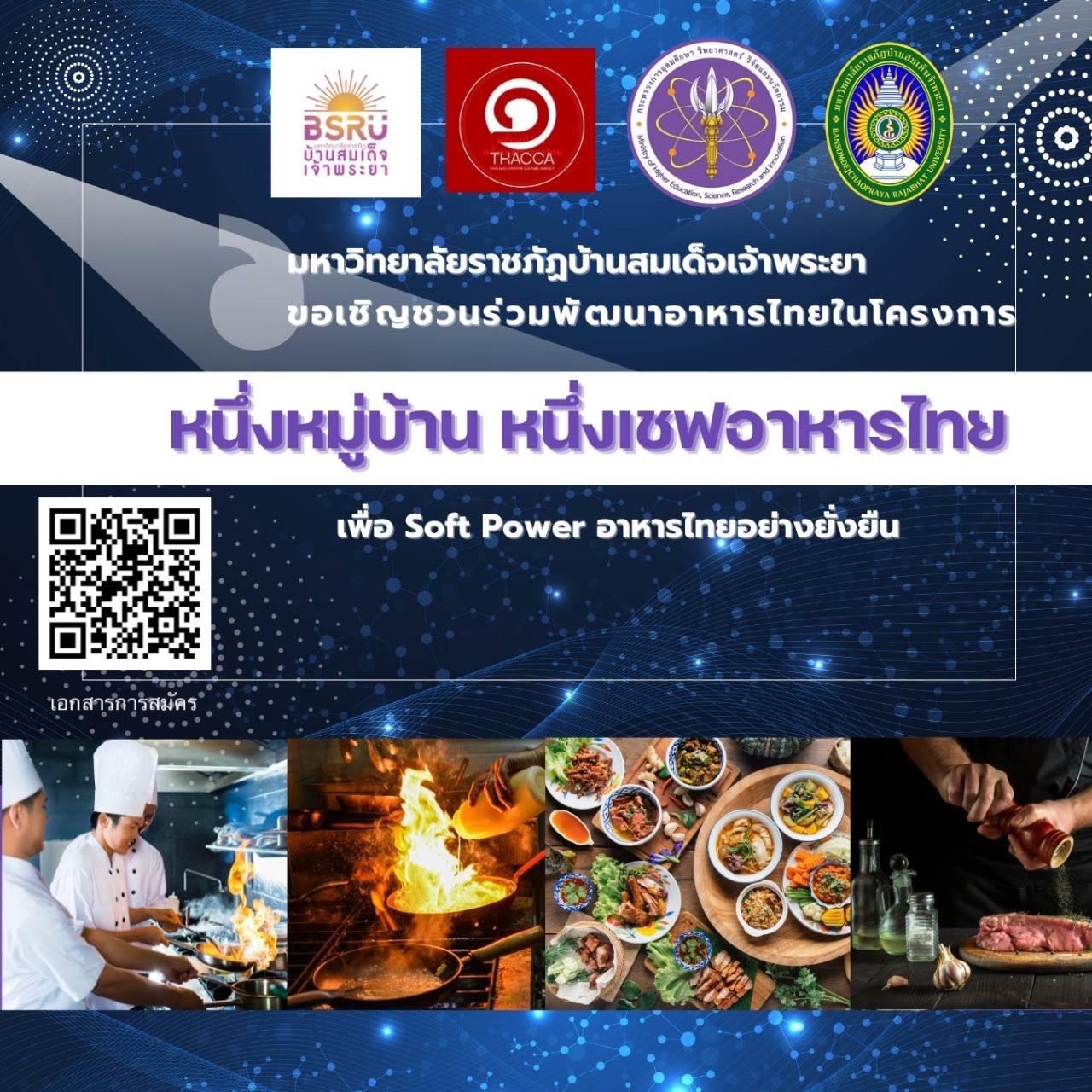
2. BSRU’s Participation in Advancing Local Soft Power through the “One Village, One Thai Chef” Initiative
In 2024, Bansomdejchaopraya Rajabhat University (BSRU) supported local government efforts to strengthen Thailand’s soft power in the area of food culture under the “One Village, One Thai Chef” initiative. Acting on behalf of the university, Assistant Professor Dr. Kanakorn Sawangcharoen, together with Assistant Professor Dr. Panita Jaednalao, participated in an online meeting with the Ministry of Higher Education, Science, Research and Innovation (MHESI), chaired by Minister Supamas Isarabhakdi.
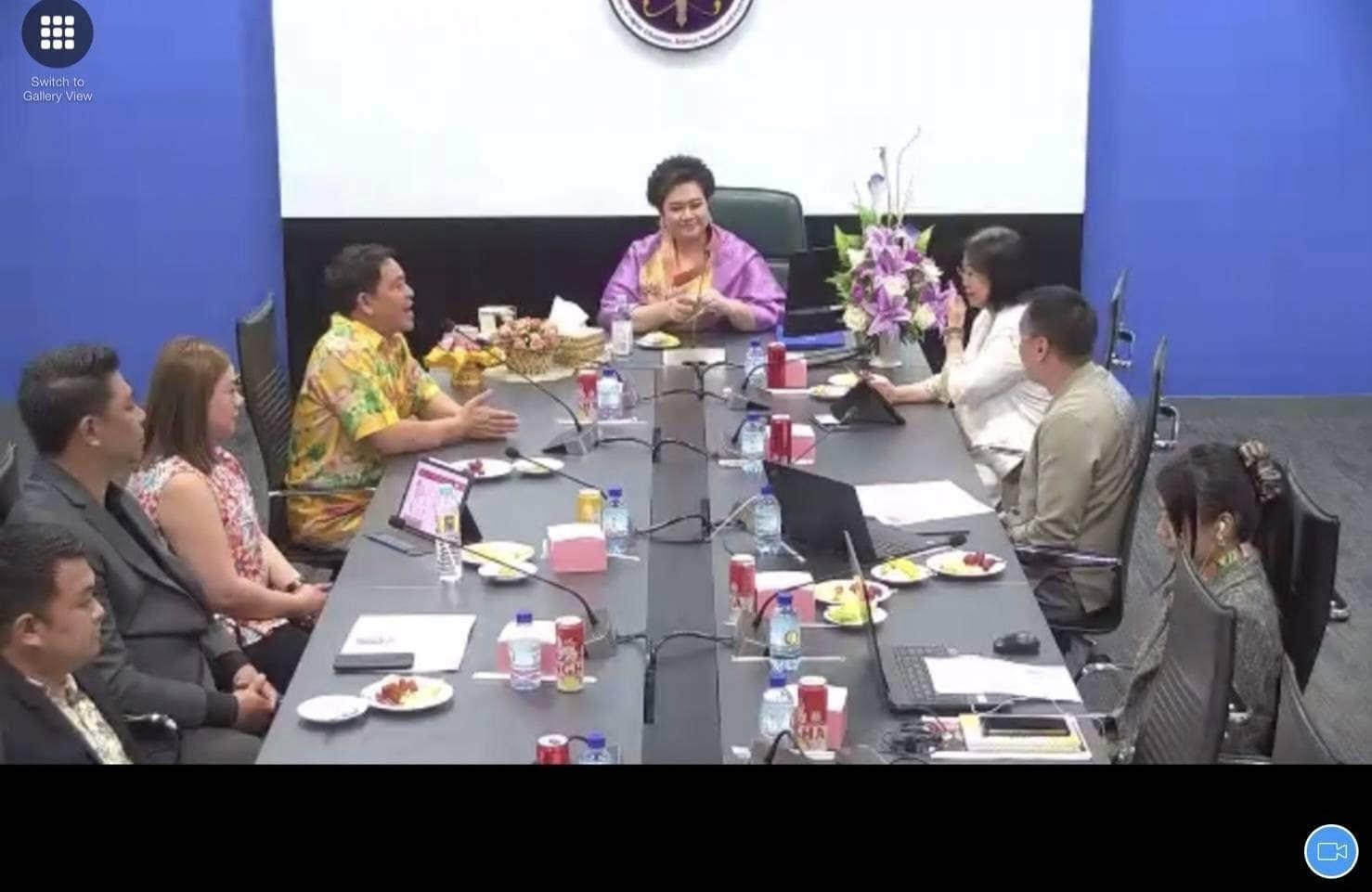
The meeting aimed to align universities’ roles with national and local strategies for developing culinary knowledge, skills, and innovation that enhance community-based tourism and local economic growth. Through its engagement, BSRU provided academic perspectives on integrating local wisdom and education into food-related soft power development, reinforcing the university’s contribution to policy discussions that promote sustainable local development and cultural identity in line with SDG 16.
3. BSRU’s Engagement in the 4th Bangkok Health Assembly: Supporting Regional Public Health Dialogue and Citizen Participation
In 2024, Bansomdejchaopraya Rajabhat University (BSRU) strengthened its regional collaboration in public health promotion by actively participating in the 4th Bangkok Health Assembly. Representing the university, Assistant Professor Dr. Kanakorn Sawangcharoen assigned Dr. Surasak Krueahong, along with Assistant Professor Dr. Kasem Tritrakan, faculty members, staff, and students, to join the event organized by the Bangkok Metropolitan Administration (BMA).
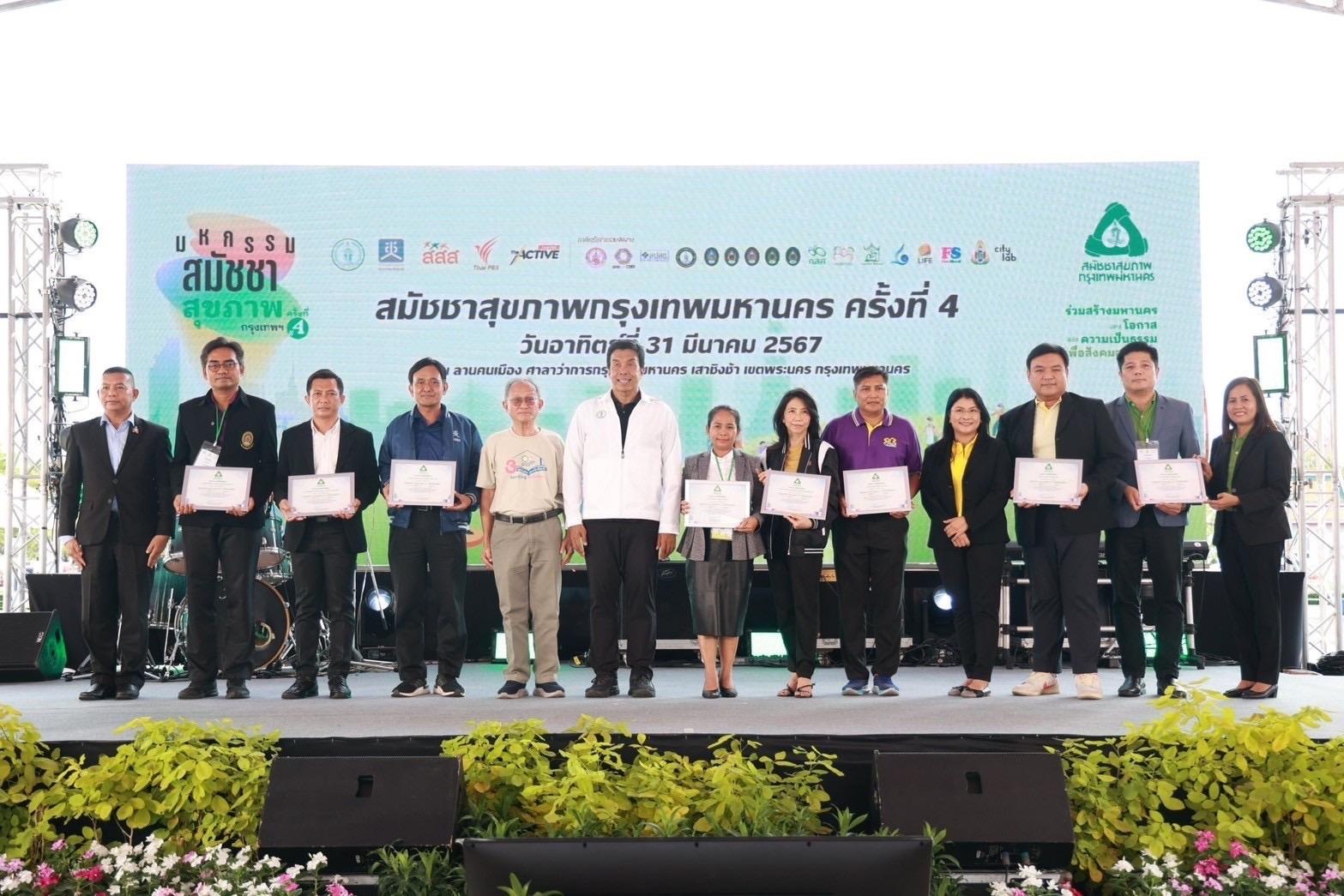
Presided over by Mr. Chadchart Sittipunt, Governor of Bangkok, the assembly was held under the theme “Creating a City of Opportunity and Justice for a Healthy Society.” The event featured a range of participatory activities, including public health screenings, community walk rallies, and policy dialogue forums such as the BKK Policy Maker application launch and Citizen Talk sessions, encouraging inclusive citizen engagement in shaping urban health policies.
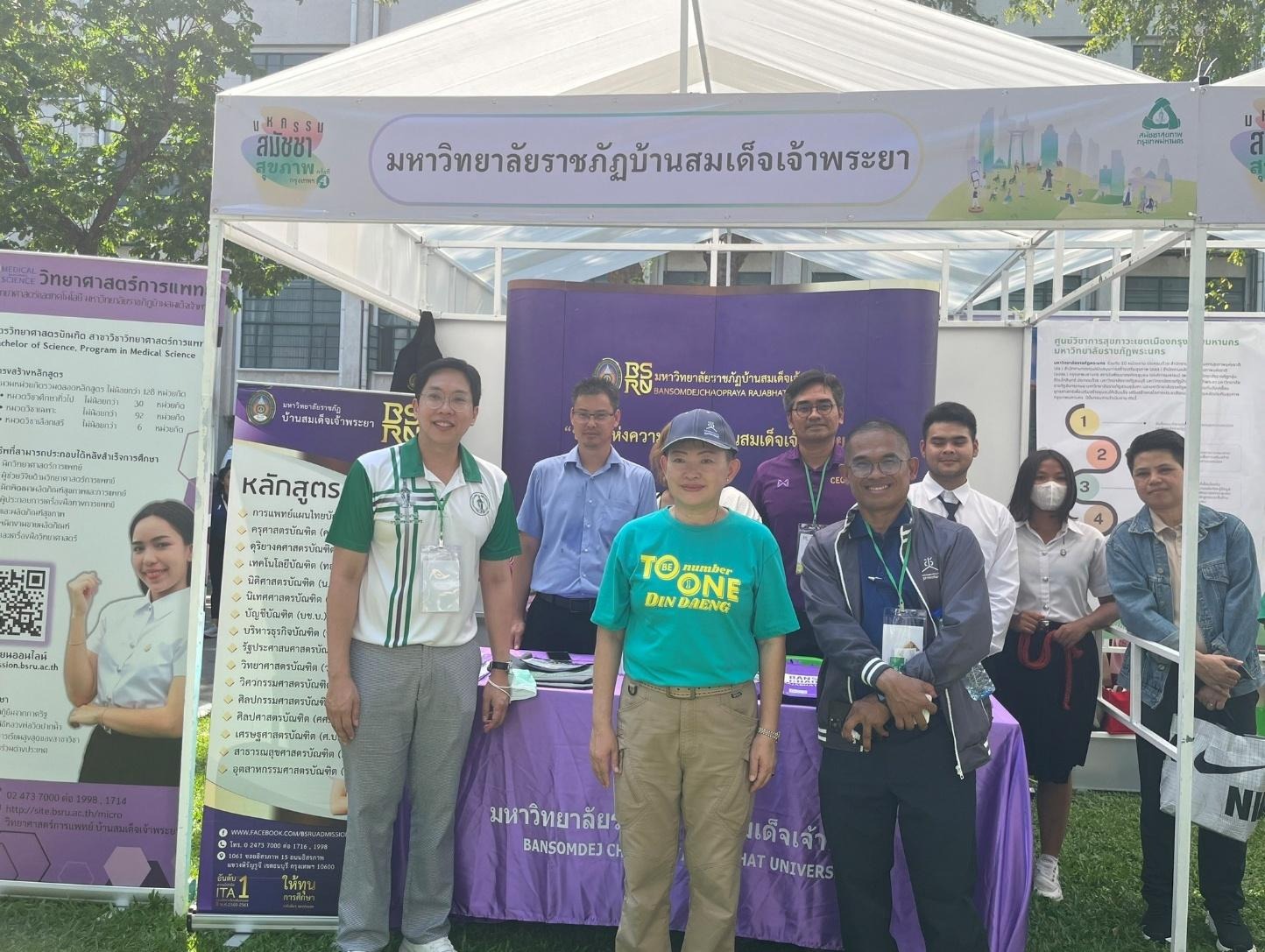
Through this participation, BSRU contributed to regional public policy dialogue and supported capacity-building for community well-being in collaboration with BMA and related agencies. The university’s engagement aligns with SDG 16 by promoting inclusive governance, evidence-informed policy discussions, and regional partnerships that strengthen social equity and sustainable urban health development.
4. BSRU’s Contribution to the 17th National Health Assembly: Supporting Participatory Public Policy for Sustainable Well-being
In 2024, Bansomdejchaopraya Rajabhat University (BSRU) contributed to national-level policy dialogue by participating in the 17th National Health Assembly (NHA), held under the theme “New Wealth for Health: Building Sustainable Well-being through a Modern Economy.” Representing the university, Assistant Professor Dr. Kanakorn Sawangcharoen, President of BSRU, assigned Dr. Surasak Krueahong, Assistant to the President, to attend the event at IMPACT Muang Thong Thani on 27–28 November 2024.
The National Health Assembly serves as a platform for participatory public policy development, bringing together government agencies, academia, and civil society to co-create evidence-based health policies. Over its 16 previous sessions, the Assembly has generated 96 policy resolutions through collaborative decision-making. The 17th session focused on two major policy topics: Transforming the Health Workforce for a Well-being Society and Sustainable Health-Oriented Tourism.
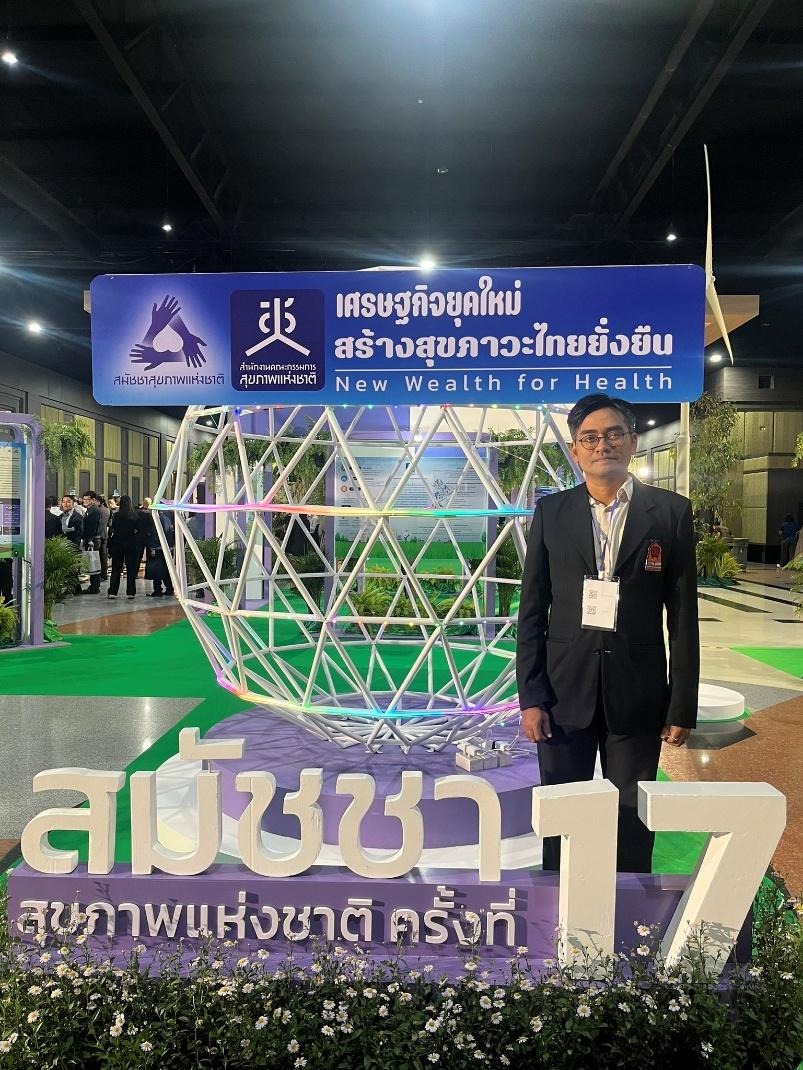
Through BSRU’s participation, the university supported the exchange of academic perspectives, contributed to policy dialogue, and reinforced the role of higher education institutions in shaping inclusive, multi-stakeholder approaches to health and well-being at the national level.
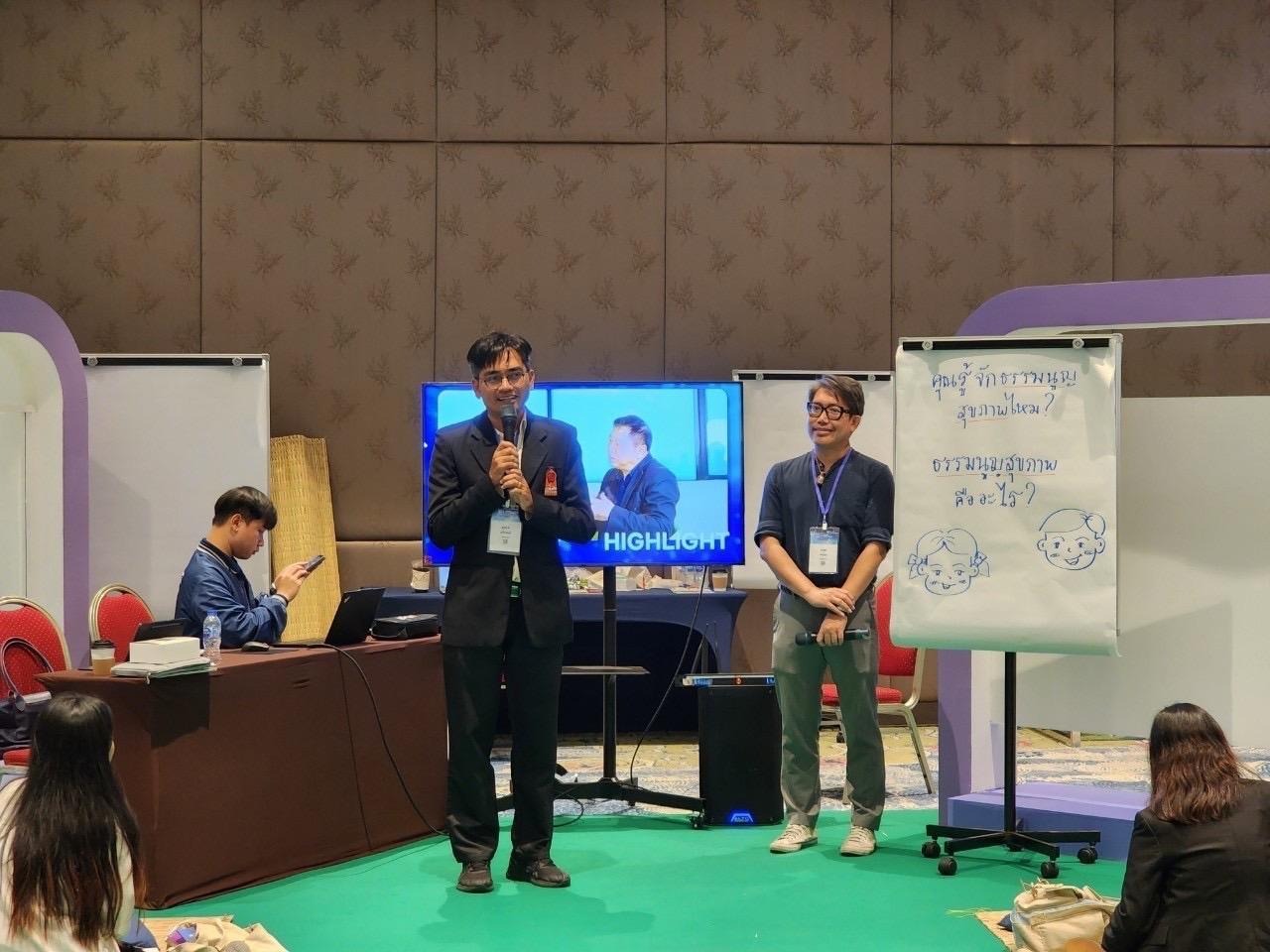
5. BSRU’s Collaboration with the National Health Commission Office to Strengthen Urban Health Policy Mechanisms
In 2024, Bansomdejchaopraya Rajabhat University (BSRU) reinforced its national-level collaboration in public health policy through a strategic meeting with the National Health Commission Office (NHCO) to discuss the long-term vision and operational direction of the Urban Health Academic Center at BSRU for the next three to five years. The meeting was chaired by Assistant Professor Dr. Kanakorn Sawangcharoen, Acting President of BSRU, with participation from university executives and representatives from NHCO, led by Mr. Techit Chaobangprom from the Bangkok Public Policy Mobilization Center.
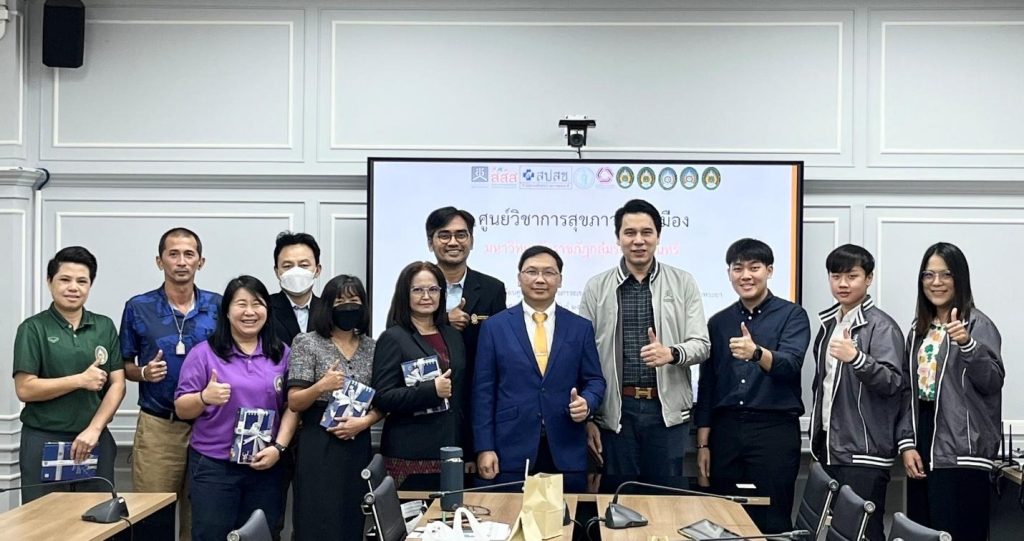
The collaboration between BSRU, NHCO, and ten strategic partners aims to develop integrated mechanisms for promoting public health and managing the Bangkok Health Security Fund. Through this partnership, the Urban Health Academic Center plays a key role in providing academic and research-based support for participatory policy processes, gathering local issues, and translating them into district health charters that reflect the diverse needs of urban communities. This initiative demonstrates BSRU’s contribution to evidence-informed policymaking at the national level, fostering coordination between academia and government to enhance sustainable health governance.
6. BSRU’s Role in Advancing National Soft Power through the Muaythai League Thailand 2025
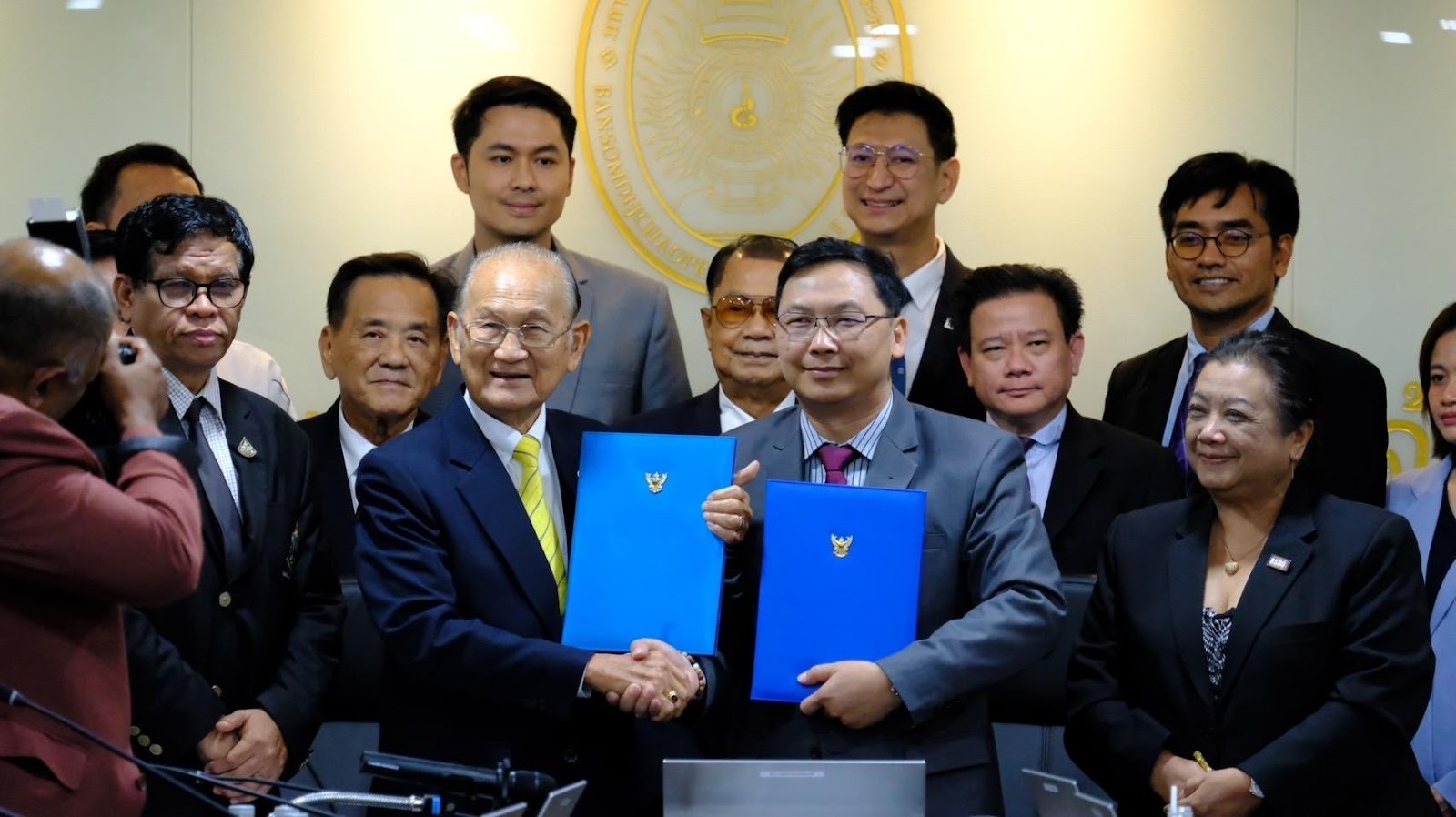
In 2024, Bansomdejchaopraya Rajabhat University (BSRU) actively contributed to national policy initiatives by signing a memorandum of understanding with the World Muaythai Council under Royal Patronage to support the Muaythai League Thailand 2025. The collaboration aims to promote Thailand’s cultural soft power through sports, enhance public engagement nationwide, and integrate sports science education across multiple disciplines, including exercise physiology, sports psychology, sports sociology, sports medicine, nutrition, and sports management.
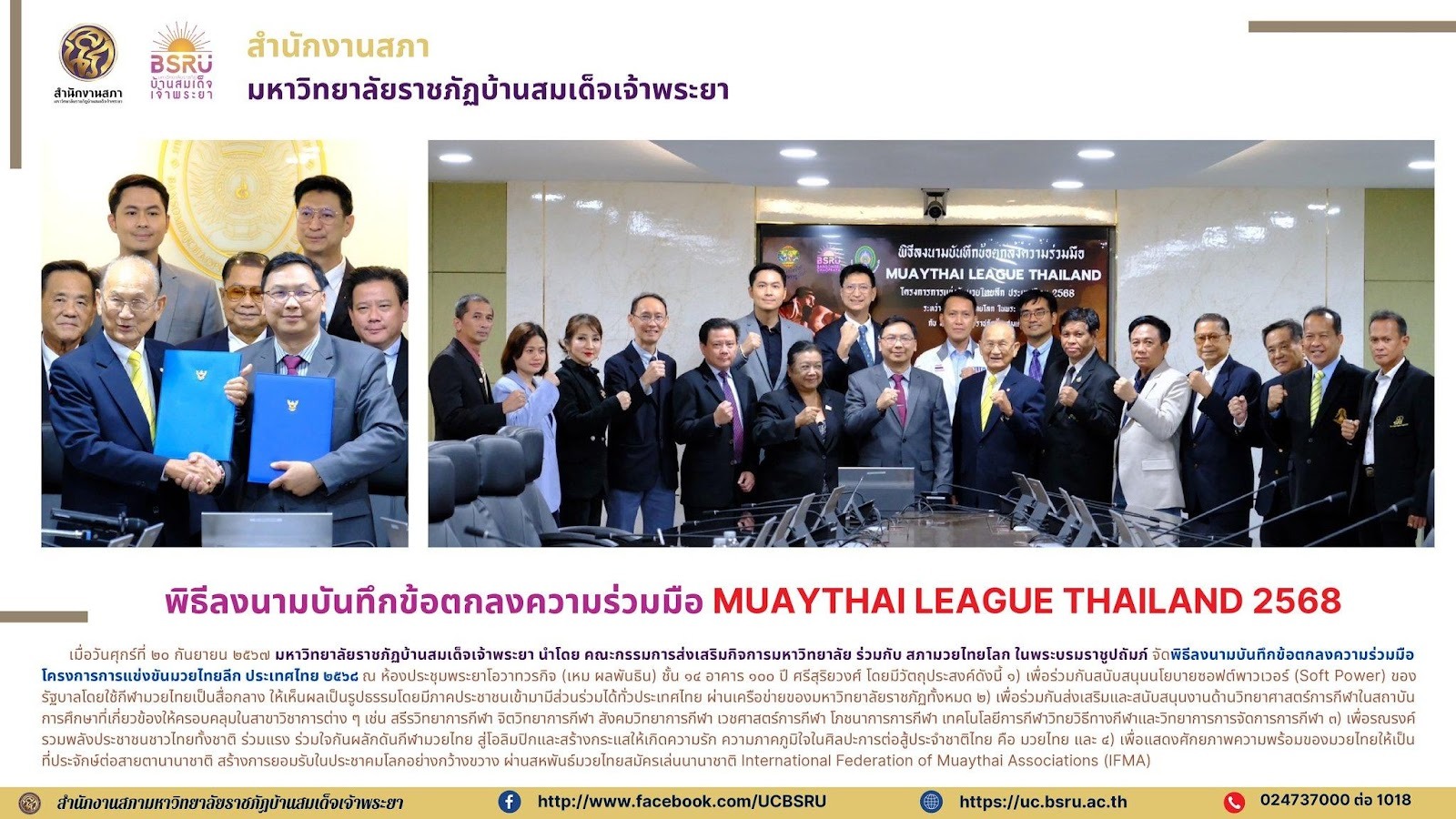
BSRU’s involvement provides expert guidance on implementing the government’s Soft Power policy, fostering national pride, and supporting Thailand’s efforts to position Muaythai for Olympic recognition. By leveraging its academic expertise and networks across the Rajabhat University system, BSRU contributes to evidence-informed national initiatives that strengthen institutional collaboration and cultural diplomacy. This engagement aligns with SDG 16 by promoting effective, participatory, and accountable national-level partnerships that support inclusive cultural and educational development.