
Bansomdejchaopraya Rajabhat University (BSRU) advances local development through an integrated strategic mechanism that aligns academic innovation with community-based impact. Guided by the BCG economic model and the principles of sustainability, the university promotes projects in waste management, health and food security, cultural innovation, education technology, and lifelong learning. These initiatives are designed to strengthen local capacities and ensure that community development efforts contribute directly to achieving the Sustainable Development Goals (SDGs). Each activity reflects the university’s commitment to using knowledge and research as tools for real-world transformation at the local level.
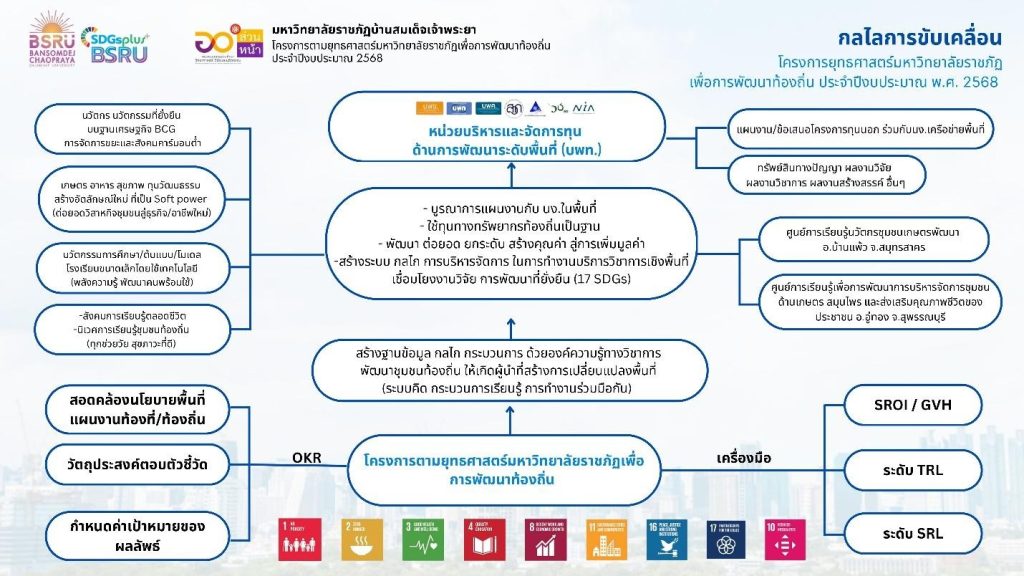
The driving framework of BSRU’s local development strategy emphasizes collaboration between the university, local government agencies, and community networks. Through the Unit for Area-Based Development Administration (UPNA), BSRU integrates resources, knowledge, and innovation to enhance social and economic well-being in target communities. The approach includes the creation of local learning centers, partnerships with agricultural and community development groups, and the use of research and innovation tools such as SROI, TRL, and SRL assessments to evaluate and scale impact. This comprehensive model reflects BSRU’s role as a regional knowledge hub dedicated to inclusive and sustainable local transformation.
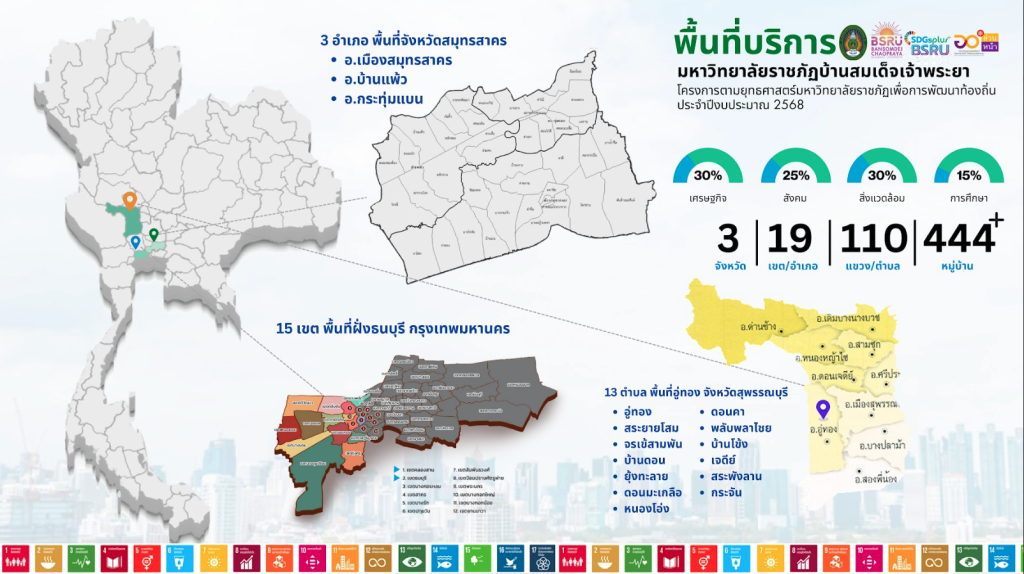
BSRU implements its local development strategy across three provinces—Bangkok, Samut Sakhon, and Suphan Buri—covering 19 districts and over 110 sub-districts, with engagement in more than 444 communities. The university’s area-based projects address key dimensions of sustainability and include urban and rural innovation zones such as the 15 districts of Thonburi in Bangkok, community agriculture networks in Ban Phaeo and Krathum Baen Districts of Samut Sakhon, and the multi-village learning areas in U Thong District, Suphan Buri. By connecting academic expertise with community needs, BSRU strengthens local resilience, fosters sustainable livelihoods, and promotes inclusive growth aligned with the SDGs.
1) Local Level Policy Initiatives
BSRU Strengthens Local Creative Economy Policy through Community-Based Programme Development
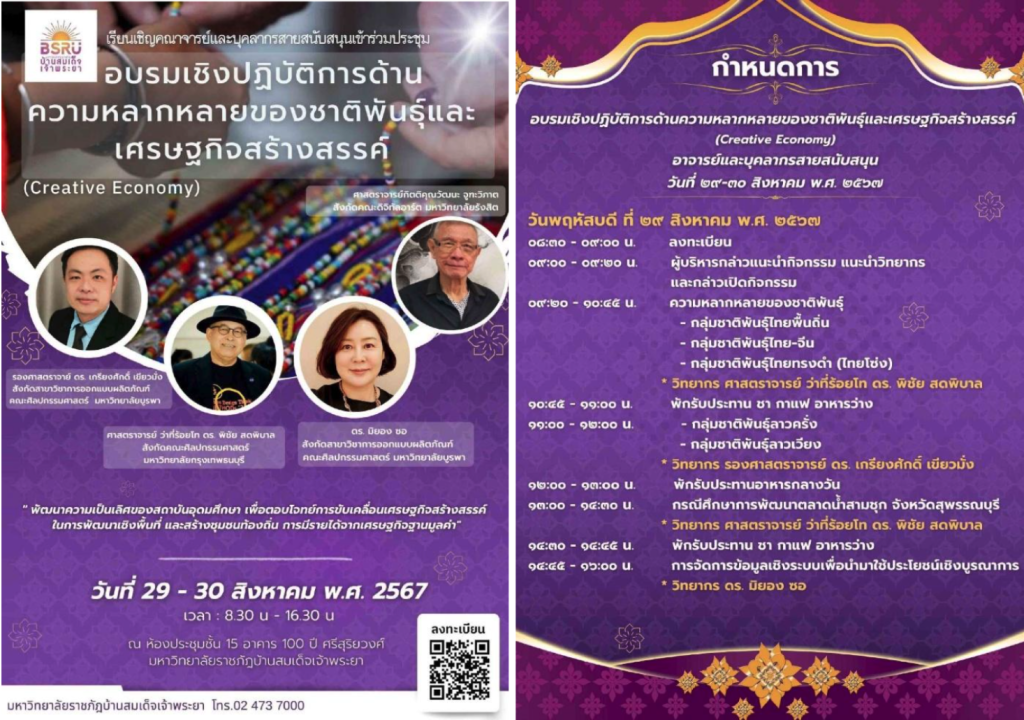
On November 16, 2024, Bansomdejchaopraya Rajabhat University (BSRU) launched a community workshop under the Project for the Development of Higher Education Excellence to Drive the Creative Economy for Area-Based Development and Local Income Generation. The event was presided over by Asst. Prof. Dr. Panita Jaednalhaow, Assistant to the President, on behalf of the University President, Asst. Prof. Dr. Kanakorn Sawangcharoen. The workshop aimed to strengthen local policy implementation by supporting communities in developing area-based curricula and creative economy models that enhance local employment and sustainable income.
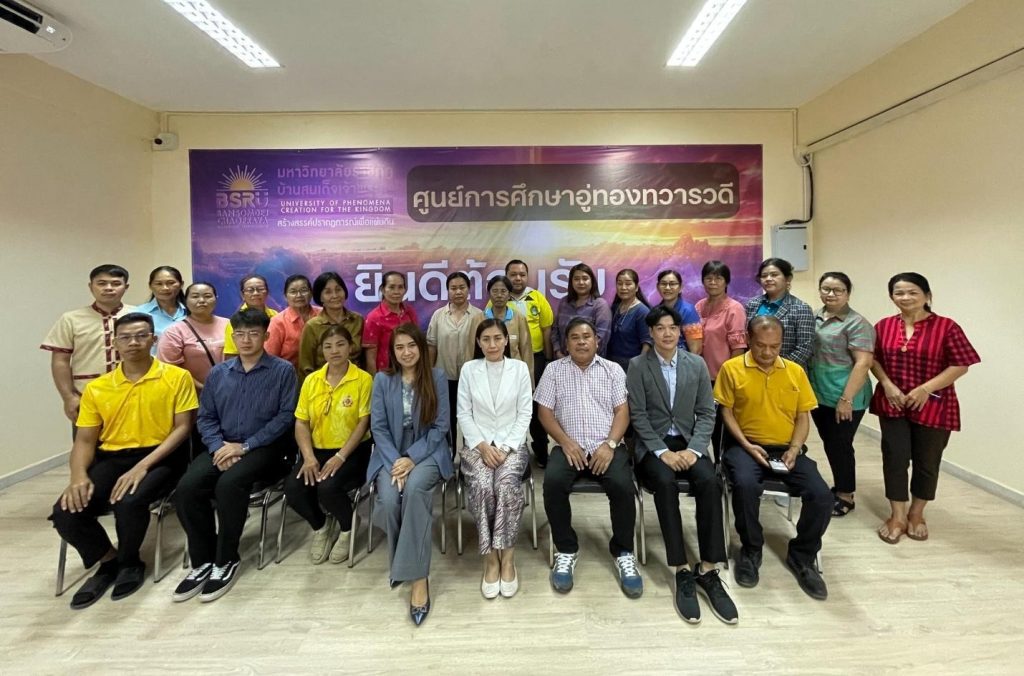
Experts and community leaders participated in the training session, including Asst. Prof. Dr. Supaporn Sihamee, Asst. Prof. Nichakarn Chaichak, and Mr. Methee Yaemkasaen, Director of Operations at the U-Thong Ancient City Sustainable Tourism Office. The activity provided a collaborative platform for local authorities, academic experts, and residents to co-design community learning programmes aligned with local economic priorities. Through this initiative, BSRU actively contributes to local policy development that addresses poverty by promoting creative and sustainable livelihoods, empowering communities to generate income from their own cultural and creative resources.
BSRU Promotes Local Policy Development to Enhance Livelihoods among Five Ethnic Communities
Bansomdejchaopraya Rajabhat University (BSRU) continues to strengthen its role in local policy development through community-based programmes that integrate cultural diversity and creative economy principles. Recently, Asst. Prof. Dr. Kanakorn Sawangcharoen, President of BSRU, presided over the opening of a workshop on Ethnic Diversity and the Creative Economy, under the Reinventing University Project for Excellence and Advanced Human Resource Development 2024. The initiative supports the national BCG economic model by using academic expertise, research, and innovation to help local governments and communities develop policies and practical models for area-based economic growth. The project empowers community members, local officials, and ethnic groups to generate sustainable income through the creative use of local wisdom and cultural heritage.
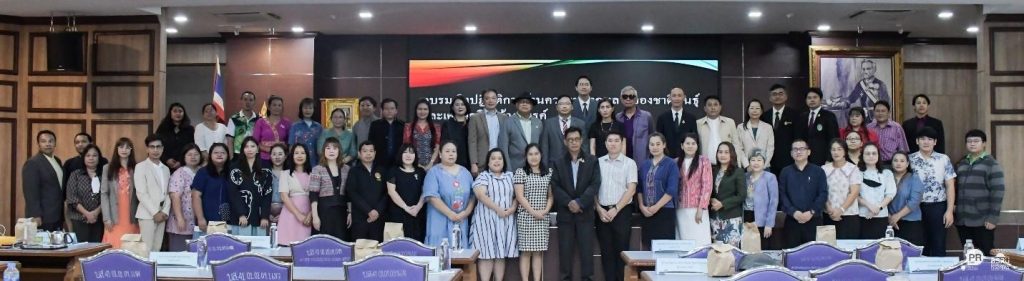
The programme focuses on five ethnic communities in Suphan Buri province—Lao Wiang, Tai Puan, Tai Song Dam, Tai Phueng Thin, and Lao Khrang—by developing localized training and curriculum co-designed with each community. Activities include heritage-based product development, local tourism promotion, and creative cultural preservation, all aimed at strengthening community identity and improving income security. By linking cultural assets with economic opportunity, BSRU contributes to local poverty reduction policies and supports inclusive, area-based development that ensures no community is left behind.
Strengthening Local Community Markets and Resource Management to Reduce Poverty in U Thong District
On 3 July 2024, Bansomdejchaopraya Rajabhat University, led by Assistant Professor Dr. Panita Chednalaw, organized a community development event in U Thong District, Suphanburi Province. University executives, faculty members, local school directors, and representatives of the Senior Citizens’ Club participated in the opening ceremony.
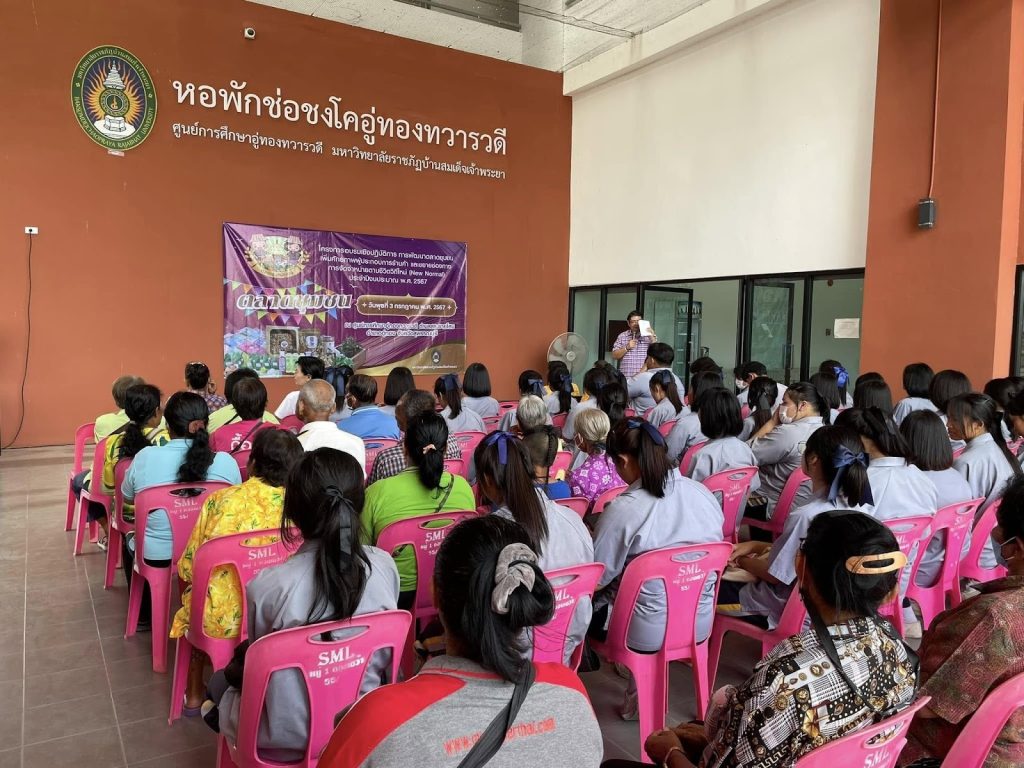
The project focused on enhancing the standards and accessibility of community products to strengthen local livelihoods. By developing community markets, increasing the capacity of local entrepreneurs, and expanding distribution channels aligned with the New Normal, the initiative directly supports local poverty reduction strategies. In parallel, capacity-building activities for community personnel were conducted to raise awareness of sustainable resource management and efficient utilization of natural resources. These efforts contribute to local policy objectives aimed at improving quality of life and reducing poverty within the community.
2) Regional Level Policy Initiatives
BSRU Advances Regional Policy Integration through the “One Curriculum, One Subdistrict” Development Model
Bansomdejchaopraya Rajabhat University (BSRU) continues to strengthen its regional role in shaping policy and practice to reduce poverty through education-driven local development. On October 8–9, 2024, BSRU organized a regional workshop titled “Developing the One Curriculum, One Subdistrict Model for Area-Based Development” under the Rajabhat University Strategy for Local Development FY 2025. The opening ceremony was presided over by Assoc. Prof. Dr. Chollada Phongphattanyothin, Vice President, with Asst. Prof. Dr. Patama Wattanapanich, Assistant to the President, delivering the project report and introducing guest speakers.
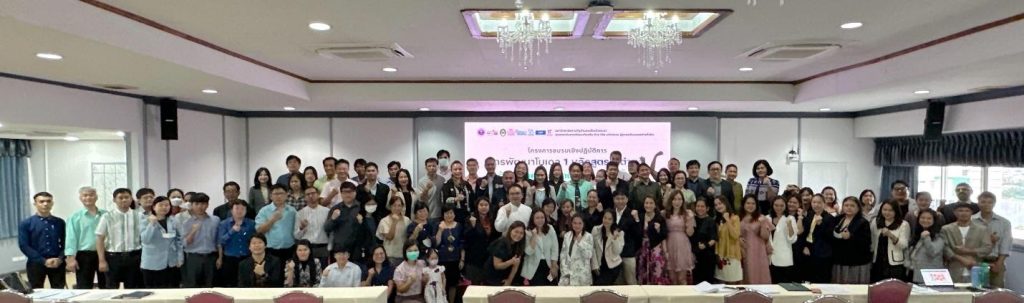
The workshop brought together university executives, faculty representatives, and development experts from Rajabhat Universities across several provinces—including Nakhon Si Thammarat and Chiang Mai—to co-develop a policy model that links academic programmes to regional economic and social needs. By positioning each university faculty or academic programme as a NODE—a regional hub for local development coordination—the initiative promotes cross-provincial collaboration and capacity building among local officials, educators, and community leaders.
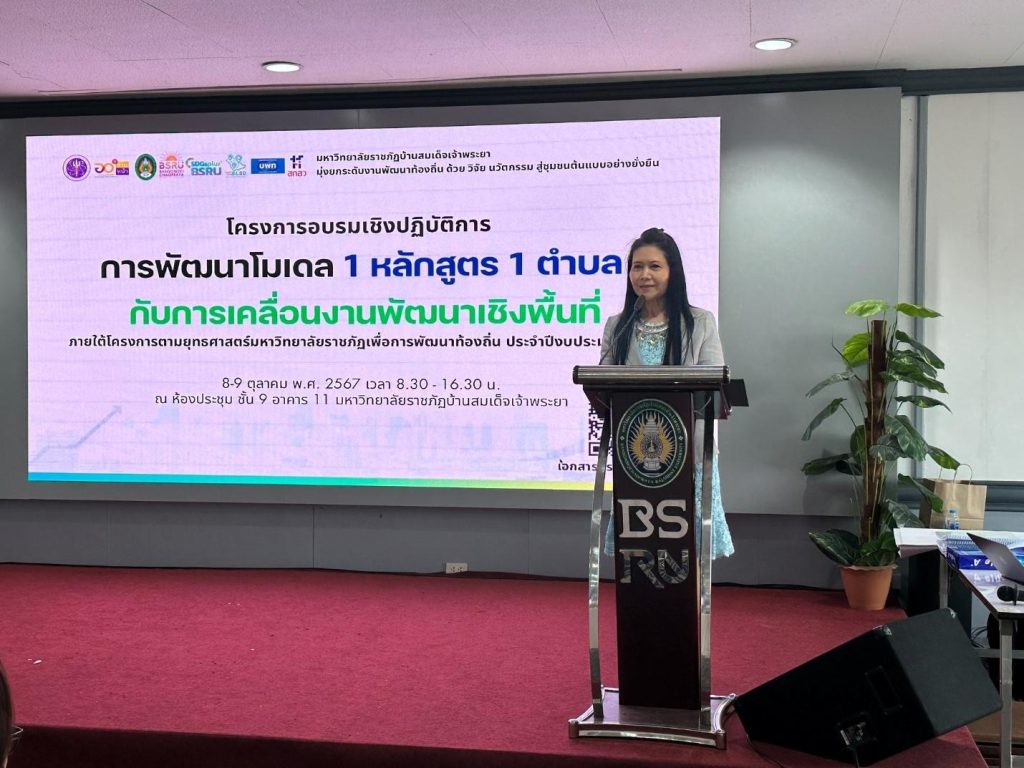
The programme integrates teaching, research, and service-learning with regional development planning, targeting key poverty-related priorities such as sustainable livelihoods, creative and circular economy promotion, and community-based innovation. As a regional knowledge hub under Thailand’s Ministry of Higher Education, Science, Research and Innovation (MHESI), BSRU contributes to policy design that aligns higher education with regional socio-economic transformation. Through this initiative, the university plays a vital role in supporting inter-provincial cooperation and the implementation of regional development policies aimed at reducing poverty and enhancing quality of life across its service areas.
Regional Collaboration for Value-Based Development
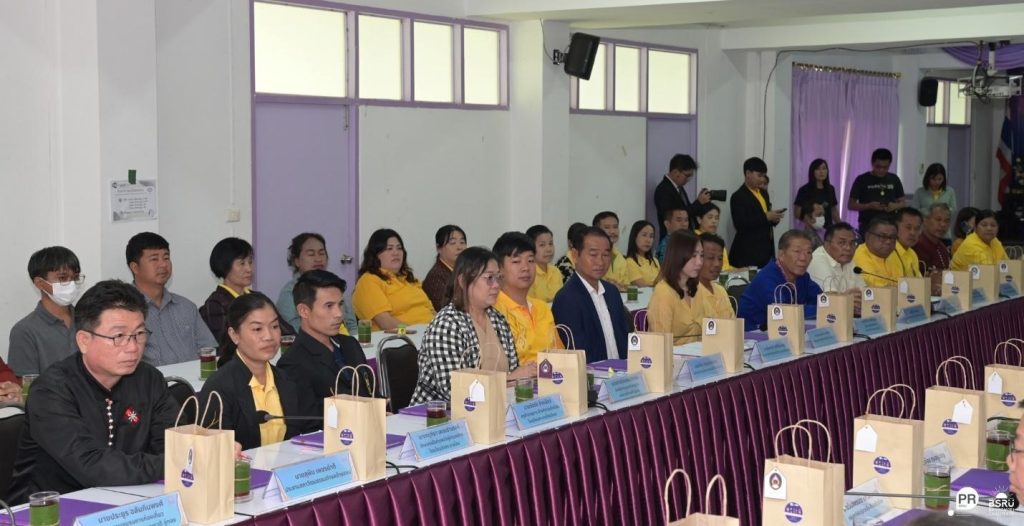
In 2024, Bansomdejchaopraya Rajabhat University (BSRU) advanced its regional engagement efforts by signing a memorandum of understanding (MOU) with 33 local administrative bodies and ethnic community leaders from U Thong District, Suphan Buri Province. The signing ceremony, held at the Suriyamonthon Building, U Thong Dvaravati Education Center, was presided over by Asst. Prof. Dr. Kanakorn Sawangcharoen, President of BSRU, and led by Asst. Prof. Dr. Panita Jaedanalaw, Assistant to the President and project leader.
The initiative, titled “Enhancing the Excellence of Higher Education Institutions to Drive the Creative Economy for Regional Development and Value-Based Communities,” aims to strengthen cooperation between higher education institutions and regional stakeholders in order to expand opportunities for community income generation and sustainable regional growth. Through interdisciplinary collaboration, the project promotes the co-development of academic programs and community-based learning models that integrate creative economy principles with local resources and cultural heritage.
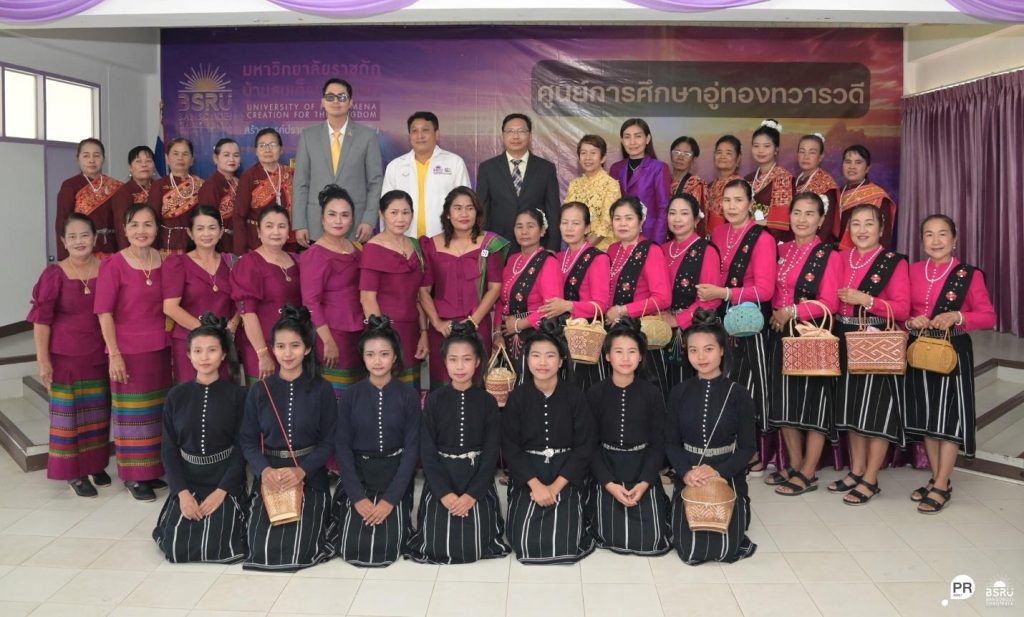
By focusing on the U Thong area—home to five distinct ethnic groups: Thai natives, Thai-Chinese, Lao Khrang, Lao Wiang, and Thai Song Dam (Thai Soeng)—the project enhances the value of local products, cultural tourism, and artisanal industries through innovation, technology, and creative design. It also fosters the development of curricula aligned with community needs, while equipping local public sector personnel with knowledge and management skills that emphasize environmental responsibility and socio-economic efficiency.
This regional collaboration exemplifies BSRU’s commitment to integrating research, academic services, and community engagement in support of Thailand’s Bio-Circular-Green (BCG) economic model. By leveraging the expertise of its faculty, staff, and students, the university continues to promote value-based, inclusive regional development, positioning itself as a key academic partner in advancing sustainable economic transformation across central Thailand.
Regional Service Area: Strengthening Local Livelihoods through Sustainable Enterprise Development
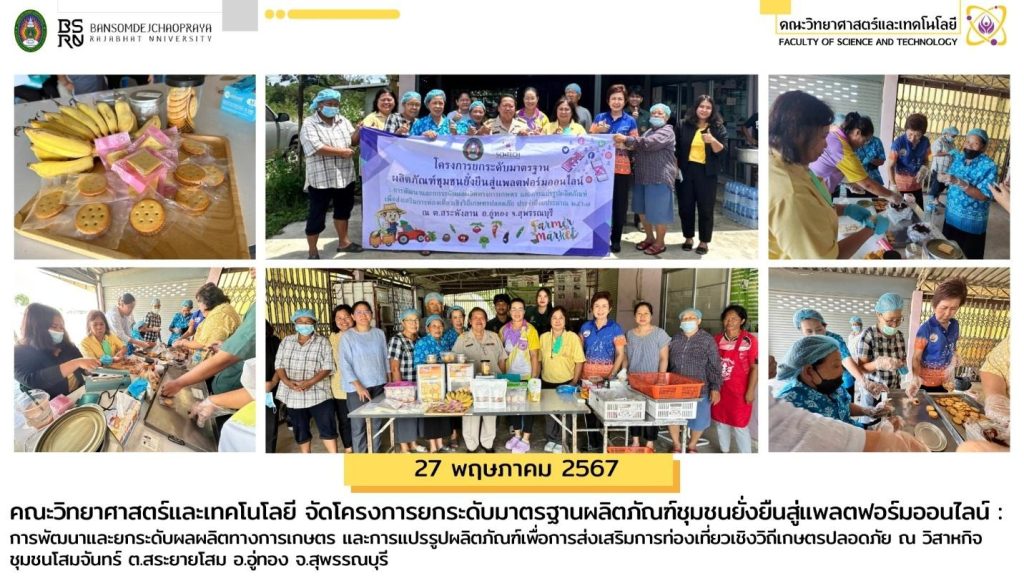
n 2024, Bansomdejchaopraya Rajabhat University (BSRU) reinforced its regional mission to reduce poverty and strengthen local livelihoods in alignment with SDG 1.1: Eradicating Poverty in All Its Forms. Through the Faculty of Science and Technology, the university implemented the project “Upgrading Sustainable Community Product Standards to Online Platforms” to enhance income generation and economic resilience among local producers in Suphan Buri Province. Conducted at the Somchan Community Enterprise in Sra Yai Som Subdistrict, U-Thong District, the initiative supported communities in improving product quality, developing value-added banana-based goods, and obtaining FDA certification. Experts from BSRU’s Food Technology and Agricultural Technology programs also trained participants to use digital platforms for marketing and to promote safe agricultural tourism. By linking scientific knowledge and local wisdom, this project empowers rural entrepreneurs, expands employment opportunities, and builds sustainable livelihoods—contributing directly to poverty reduction and inclusive regional growth.
3) National Level Policy Initiatives
National-Level Community Development and Financial Management Initiative
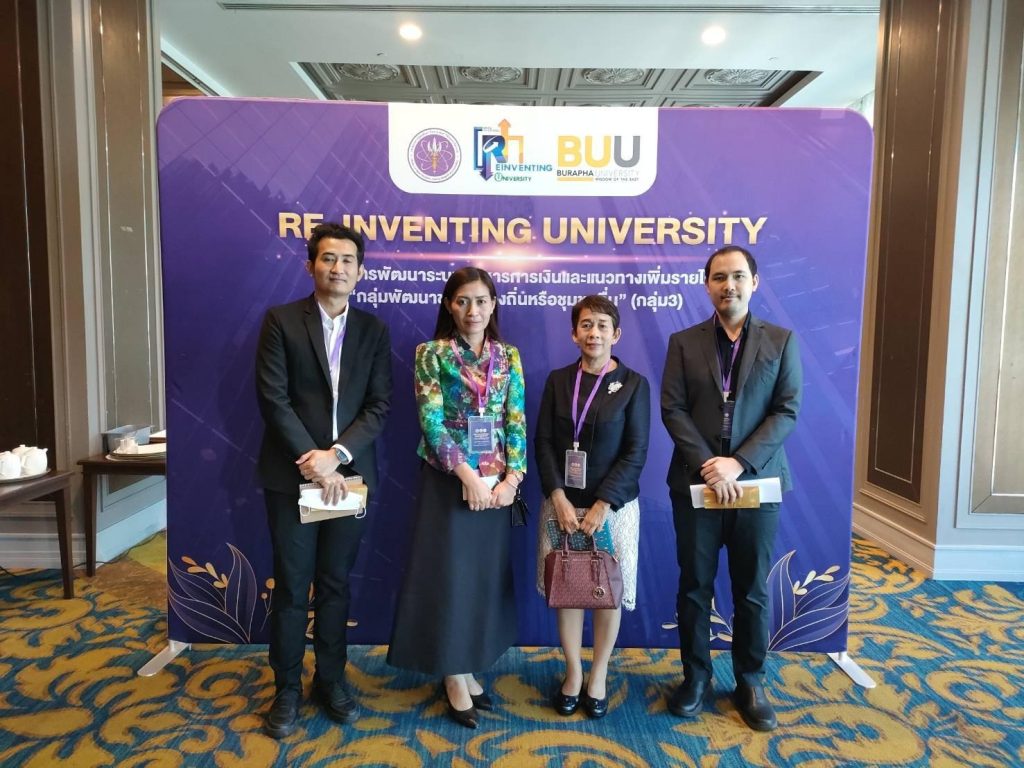
On 17 July 2024, Bansomdejchaopraya Rajabhat University executives, led by Associate Professor Dr. Panita Chednalaw and Vice President Dr. Sirikan Phokhiew, participated in the launch of the project “Development of Financial Management Systems and Revenue Enhancement Strategies for Local and Other Communities – Group 3” under the Reinventing University policy (Area-Based & Community Engagement cluster). The event was presided over by Mr. Permsuk Satchaphiwat, Permanent Secretary of the Ministry of Higher Education, Science, Research and Innovation, at Mayfair Ballroom C, The Berkeley Hotel, Pratunam, Bangkok.
This initiative operationalizes the national Reinventing University framework by mobilizing universities to directly support local and regional communities. Through the project, participating universities strengthen financial management systems, identify strategies to increase revenue, and enhance local entrepreneurial capacity. By linking university expertise and resources with community development, the program contributes to national policy objectives for poverty reduction, inclusive economic growth, and improved quality of life across Thailand.
This initiative emphasizes a collaborative approach that involves government sectors, private entities, local communities, educational institutions, and research organizations working together towards common goals. Recognizing the critical role of higher education in developing high-level human resources, BSRU contributes to the reform of the higher education system through the concepts of re-orientation, re-profiling, re-structuring, and re-organization. Being classified as an “Area-Based & Community University”, BSRU aims to enhance its institutional management and align its educational offerings with the evolving needs of the economy, thereby supporting sustainable national development and improving the competitiveness of the country.
Advancing Proactive Human Resource Management for Community Development under the Reinventing University Policy
On 3–4 December 2024, Bansomdejchaopraya Rajabhat University, led by Associate Professor Dr. Panita Chednalaw, Assistant President, and the Acting Director of Human Resources Management, participated in a national consultation meeting on “Development of Proactive Human Resource Management toward University Transformation – Local Community Development Cluster (Group 3)” under the Reinventing University initiative for the fiscal year 2024. The meeting was held at Mayfair Ballroom A, The Berkeley Hotel, Bangkok, and was opened by Professor Dr. Peeraphong Teekasakul, Chair of the Subcommittee on University Transformation, together with Mr. Panperm Saks Arunee, Acting Advisor on Higher Education Development, Office of the Permanent Secretary, Ministry of Higher Education, Science, Research, and Innovation (MHESI
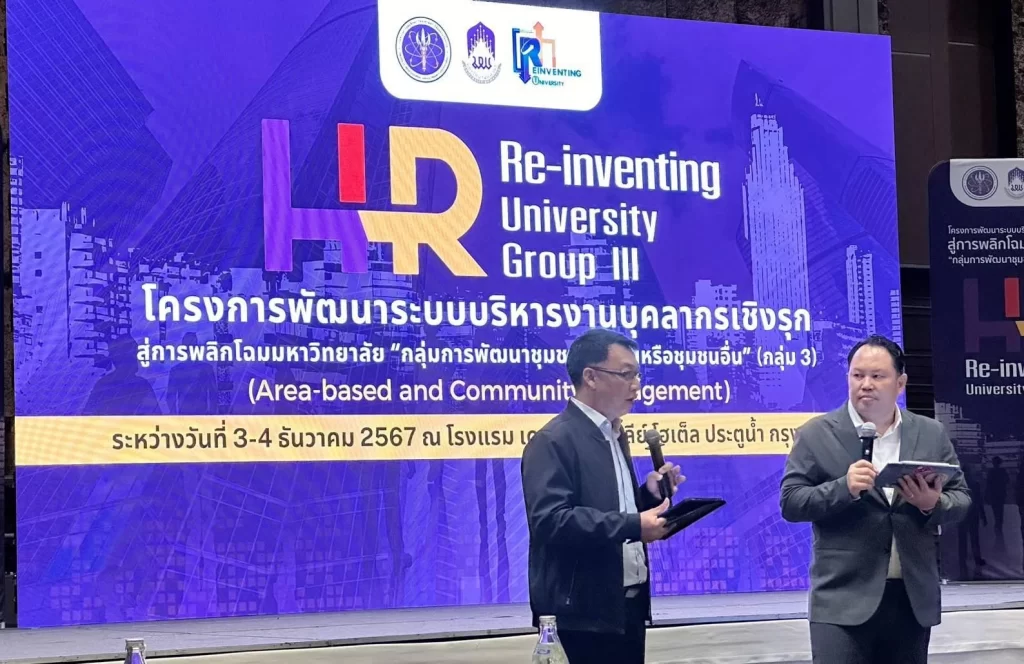
The consultation aimed to gather input and recommendations for transforming HR management systems in universities to support proactive engagement with local and regional communities. Participating institutions conducted workshops to discuss HRM and HRD priorities, mechanisms for facilitating effective management, and approaches for developing university personnel in alignment with national policies.
By linking human resource development and management reforms with community-focused strategies, this initiative operationalizes the Reinventing University policy at the national level. Universities in Group 3 are tasked with leveraging their expertise, personnel, and organizational capacity to strengthen local community development, enhance livelihoods, and support national poverty reduction objectives through inclusive and sustainable community engagement.