
To enhance student success for those in the lowest financial quintile, we examine the academic outcomes of students from households within the bottom 20% income bracket at Bansomdejchaopraya Rajabhat University (BSRU). Analyzing graduation rates for this group is crucial for achieving the university’s goals of boosting retention and completion among economically disadvantaged students.
In 2024, BSRU reaffirmed its dedication to closing the graduation gap for students from economically disadvantaged backgrounds by establishing clear targets and implementing targeted support systems. This commitment is reflected in the careful monitoring of graduation rates by household income, demonstrating the university’s focus on promoting equitable educational outcomes.
 AAR pdf Report
Faculty of Education
In the Faculty of Education, the largest share of enrolled students came from households earning less than 150,000 THB per year, representing 239 out of 440 students (54%). Another 24% (104 students) were from households with incomes between 150,000–300,000 THB, while 7% (30 students) reported incomes above 300,000 THB. A further 15% (67 students) indicated no household income.
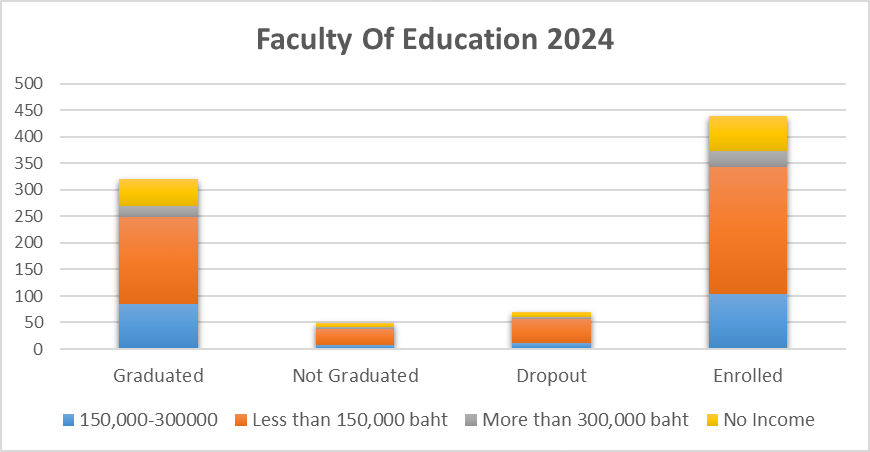
Graduation outcomes reflect these patterns. Among the 321 graduates, 51% (163 students) came from households earning less than 150,000 THB, 26% (85 students) from the 150,000–300,000 THB bracket, 7% (22 students) from households earning above 300,000 THB, and 16% (51 students) reported no income. For the 49 students who did not graduate, 63% (31 students) were from households earning less than 150,000 THB, 14% (7 students) from households earning 150,000–300,000 THB, 8% (4 students) from households earning above 300,000 THB, and 14% (7 students) had no income.
In the Faculty of Education, dropout rates remain relatively low across all income groups, reflecting BSRU’s strong commitment to supporting students throughout their academic journey. Even among students from the lowest income bracket (less than 150,000 THB per year), who face the greatest economic challenges, the dropout rate stands at 19%, only slightly higher than other groups. Students from households earning 150,000–300,000 THB had the lowest dropout rate at 12%, while those with no income and those earning more than 300,000 THB both recorded dropout rates of 13%.
These figures show that BSRU is successfully maintaining student engagement and retention, regardless of economic background. With the largest proportion of enrollments (54%) coming from low-income households, the university’s efforts to provide financial aid, career guidance, and tailored support play a crucial role in helping students persist in their studies. This demonstrates BSRU’s dedication to reducing inequality and fostering equal opportunities for academic success.
Humanities & Social Sciences


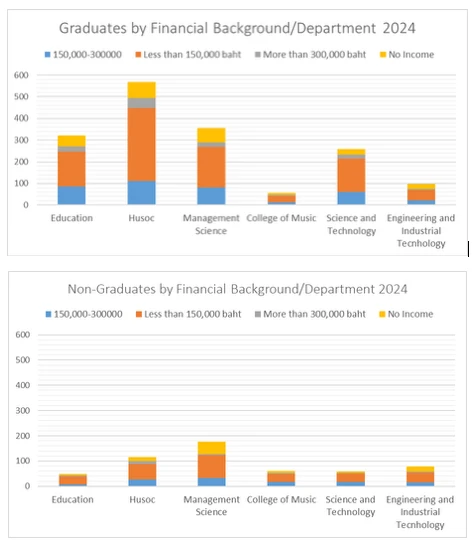
In the Faculty of Humanities and Social Sciences (HUSOC), the distribution of academic outcomes across income groups reflects both the diversity of the student body and BSRU’s ongoing commitment to supporting retention. The faculty enrolled a total of 921 students, with the largest share (56%, or 516 students) coming from households earning less than 150,000 THB per year. Students from the 150,000–300,000 THB bracket accounted for 22% of enrollments (202 students), followed by those with no income at 14% (128 students), and those earning more than 300,000 THB at 8% (75 students).
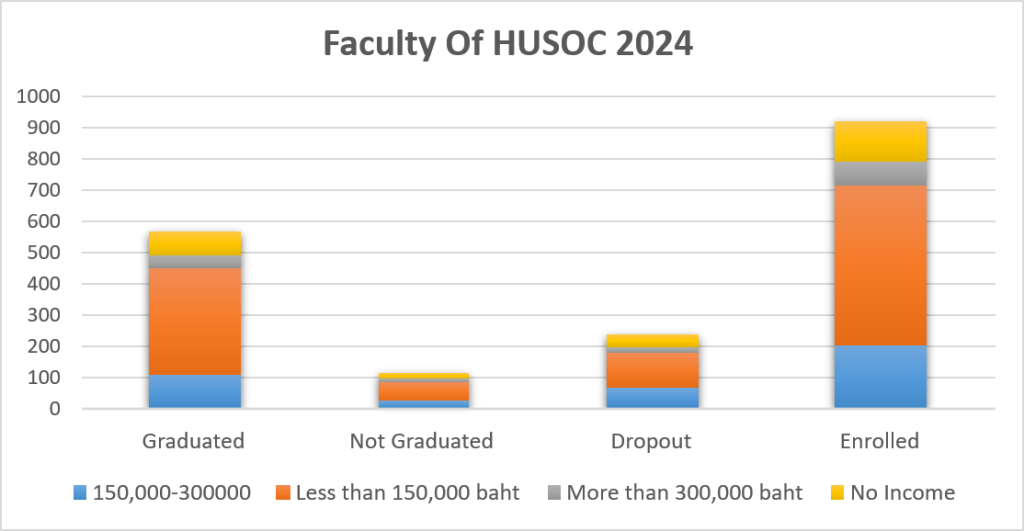

Graduation outcomes demonstrate the faculty’s effectiveness in helping students succeed regardless of economic background. Among all enrolled students, 569 graduated, with 59% of graduates coming from the lowest income group, 20% from the middle-income bracket, 8% from higher-income households, and 13% from students with no income. The proportion of students who did not graduate or dropped out remains relatively contained across all income groups.
Dropout rates across income groups reflect BSRU’s sustained efforts to support students despite diverse economic challenges. While dropout rates vary, they remain within a range that demonstrates effective student retention strategies. Students from households earning less than 150,000 THB per year recorded a dropout rate of 23%, lower than both students with no income (29%) and those earning between 150,000–300,000 THB (32%). Students from households earning more than 300,000 THB had a dropout rate of 24%, only slightly above the overall average.
Notably, the largest share of enrollments (516 students, or 42% of total) comes from low-income households earning less than 150,000 THB per year. Despite the economic challenges this group faces, their dropout rate remains relatively moderate, reflecting the university’s strong support through financial aid, academic guidance, and student services. These outcomes highlight BSRU’s ongoing commitment to sustaining student success and minimizing barriers to higher education, in line with its mission to promote equity and access for all.
Faculty of Management Science

In the Faculty of Management Science, the distribution of academic outcomes across income groups reflects both the diversity of the student body and BSRU’s continued commitment to supporting student success. The faculty enrolled a total of 732 students, with the largest share (52%, or 383 students) coming from households earning less than 150,000 THB per year. Students from the 150,000–300,000 THB bracket accounted for 21% of enrollments (151 students), followed by those with no income at 22% (163 students), and those earning more than 300,000 THB at 5% (35 students).
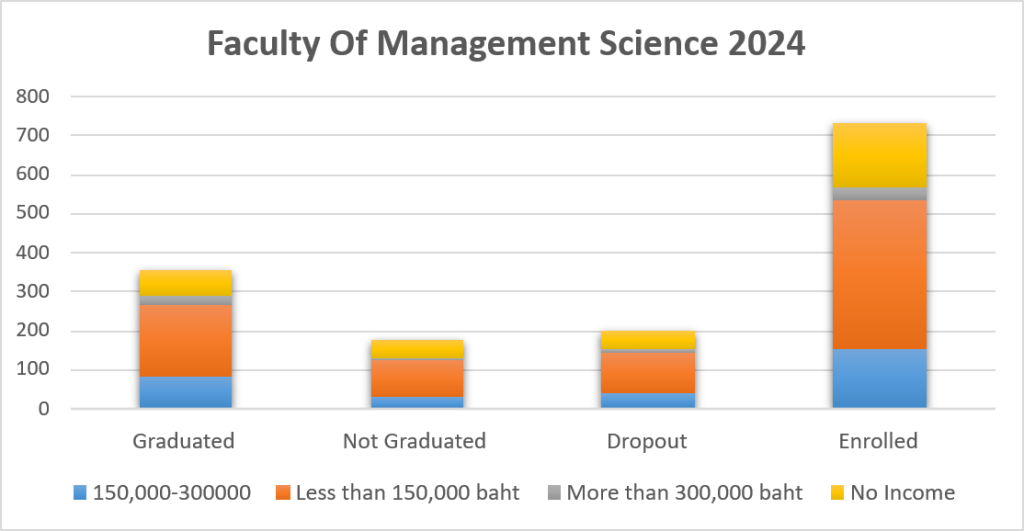
Graduation outcomes highlight the faculty’s success in helping students complete their studies despite financial challenges. Of the enrolled students, 355 graduated, with 53% of graduates coming from the lowest income group, 23% from the middle-income bracket, 6% from higher-income households, and 18% from students with no income. The rates of non-completion remain moderate across income groups, with dropout rates ranging from 25% for the 150,000–300,000 THB bracket to 29% for students with no income. Students from households earning less than 150,000 THB reported a dropout rate of 27%, while those earning more than 300,000 THB had a dropout rate of 26%.
These outcomes indicate that, even among students facing significant financial hardship, BSRU is able to maintain stable retention rates through its robust support systems. The faculty’s efforts, including scholarships, career guidance, and targeted academic assistance, play a key role in reducing barriers to completion. This demonstrates BSRU’s strong commitment to fostering equity in higher education and ensuring that all students have the opportunity to succeed.
College of Music
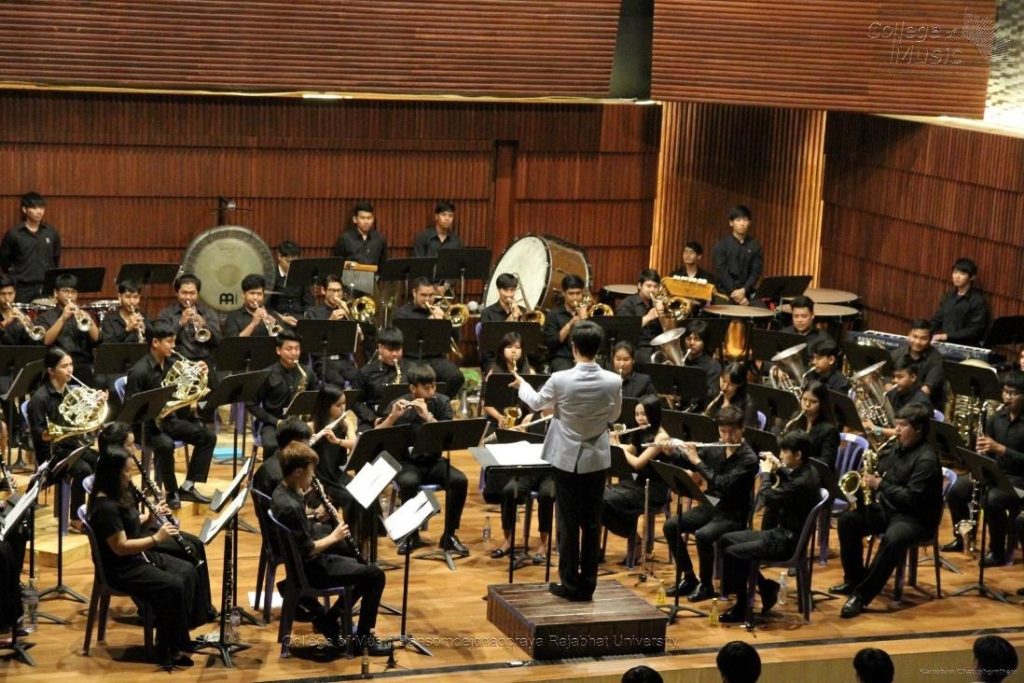
In the College of Music, academic outcomes across income groups highlight both the diversity of the student body and BSRU’s efforts to maintain strong retention despite varying economic challenges. The college enrolled a total of 170 students, with the largest share (55%, or 94 students) coming from households earning less than 150,000 THB per year. Students from the 150,000–300,000 THB bracket accounted for 23% of enrollments (39 students), followed by those with no income at 15% (25 students), and those earning more than 300,000 THB at 7% (12 students).
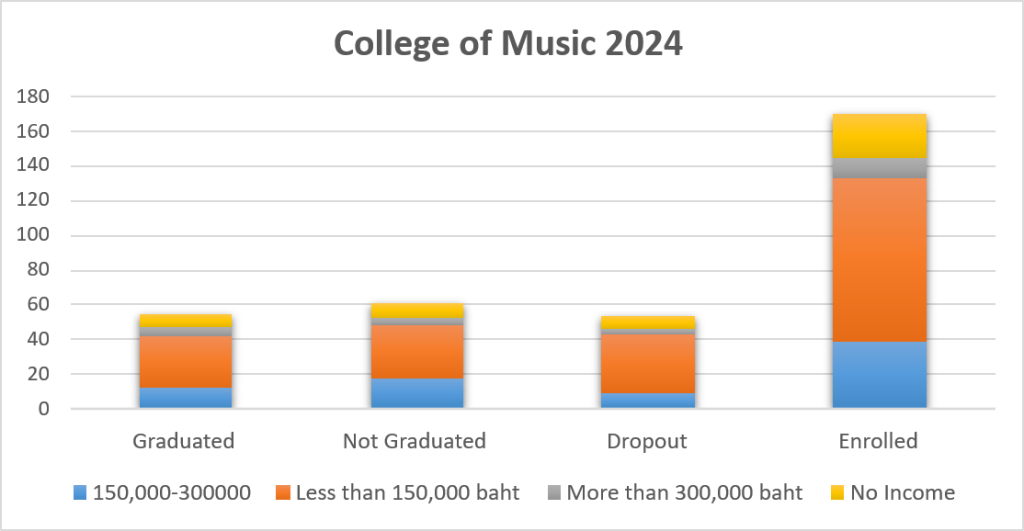
Graduation outcomes reflect the college’s commitment to supporting students’ academic success. Of all enrolled students, 55 graduated, with 55% of graduates coming from the lowest income group, 22% from the middle-income bracket, 9% from higher-income households, and 15% from students with no income. Dropout rates, while varying across groups, remain relatively contained: 23% for students earning 150,000–300,000 THB, 25% for those earning more than 300,000 THB, 32% for students with no income, and 36% for the lowest-income group.
Despite these differences, the college’s ability to sustain graduation outcomes and manage dropout rates across income levels demonstrates the impact of BSRU’s student support mechanisms. Through financial aid, academic counseling, and tailored guidance, the College of Music helps ensure that economic hardship does not become a barrier to academic achievement. This reflects BSRU’s strong commitment to equitable access and student success.
Faculty of Science & Technology
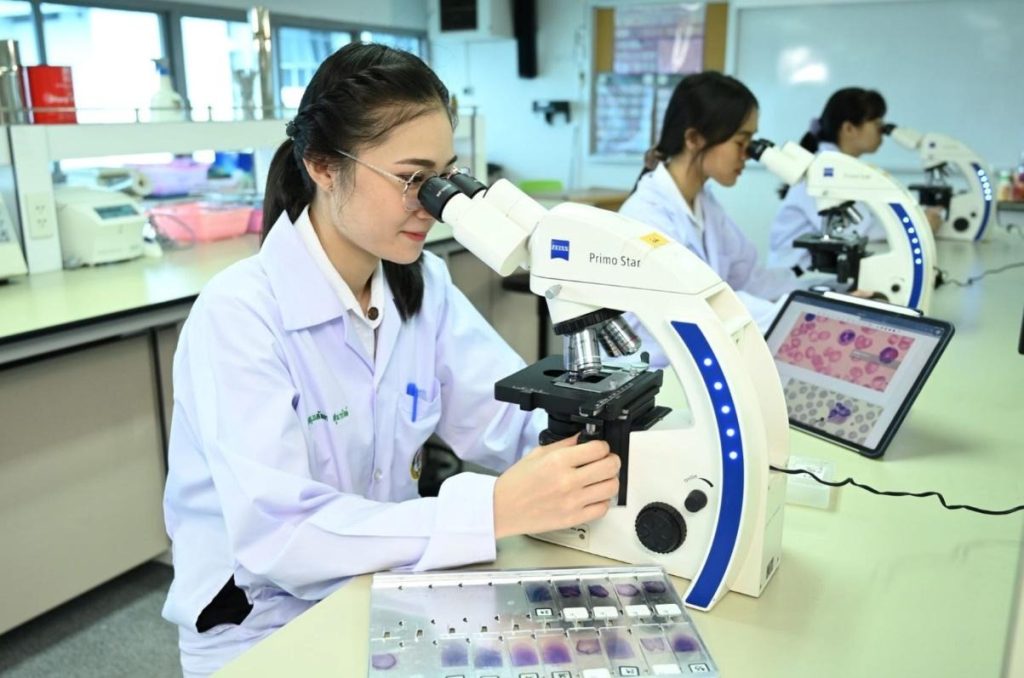
In the Faculty of Science and Technology, academic outcomes across income groups highlight both the diversity of the student body and BSRU’s dedication to maintaining student success. The faculty enrolled a total of 442 students, with the largest proportion (54%, or 239 students) coming from households earning less than 150,000 THB per year. Students from the 150,000–300,000 THB bracket made up 21% of enrollments (94 students), those with no income accounted for 10% (43 students), and students earning more than 300,000 THB comprised 6% (26 students).
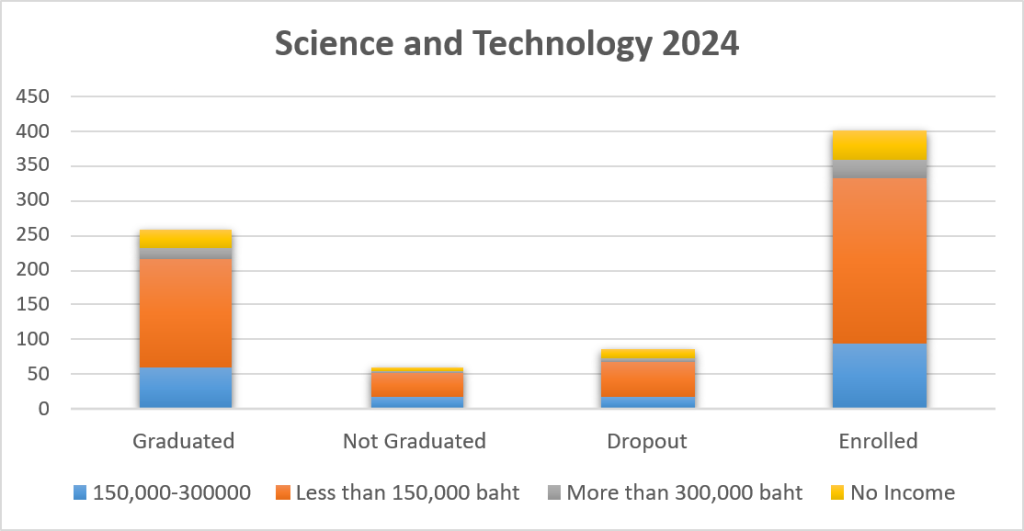
Graduation outcomes show the faculty’s ability to support students toward completion regardless of economic background. Among enrolled students, 258 graduated, with 60% of graduates coming from the lowest income group, 23% from the middle-income bracket, 7% from higher-income households, and 10% from students with no income. Dropout rates across income groups remain relatively moderate, ranging from 18% for students in the 150,000–300,000 THB bracket to 28% for students with no income. Students from households earning less than 150,000 THB reported a dropout rate of 21%, while those earning more than 300,000 THB had a dropout rate of 23%.
These figures illustrate that, even in the face of financial challenges, BSRU is maintaining positive retention outcomes. Through robust support systems such as financial aid, academic counseling, and personalized assistance, the Faculty of Science and Technology continues to ensure that students have the resources needed to complete their studies. This reflects the university’s broader commitment to fostering equitable access and academic success for all.
Faculty of Engineering & Industrial Technology
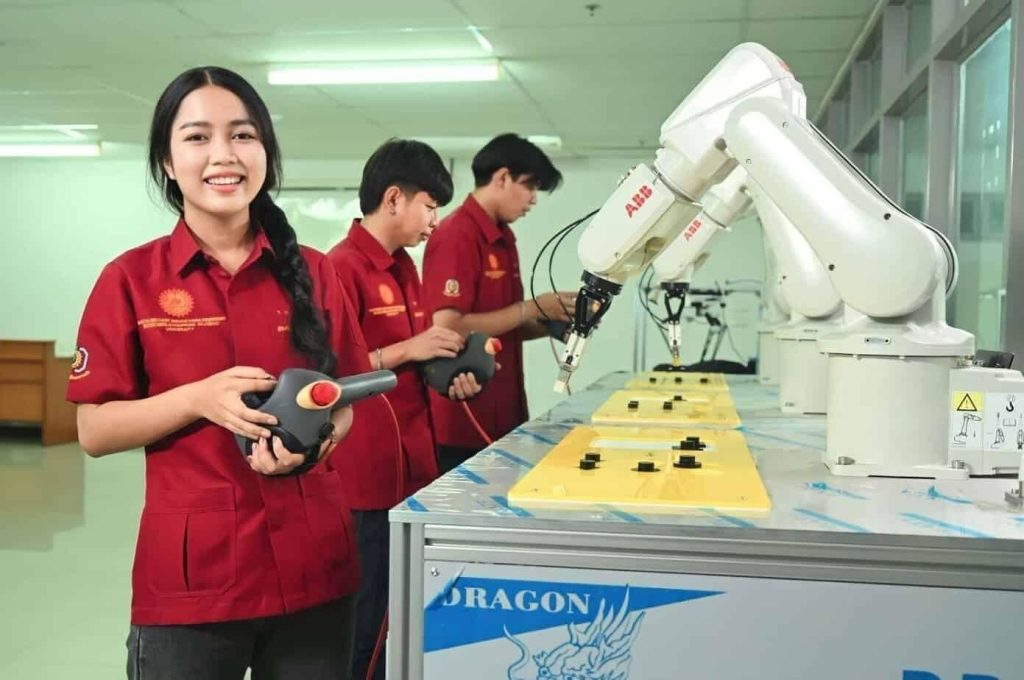
In the Faculty of Engineering and Industrial Technology, academic outcomes reflect both the economic diversity of the student body and BSRU’s ongoing efforts to support student achievement. The faculty enrolled a total of 253 students, with the largest proportion (51%, or 130 students) coming from households earning less than 150,000 THB per year. Students from the 150,000–300,000 THB bracket accounted for 19% of enrollments (49 students), those with no income made up 25% (64 students), and students earning more than 300,000 THB comprised 4% (10 students).
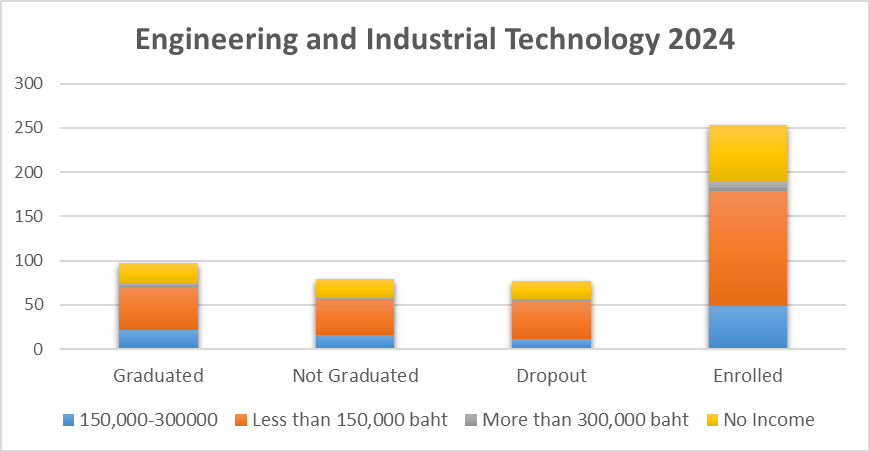
Graduation outcomes highlight the faculty’s commitment to enabling students to complete their studies despite financial challenges. Of the enrolled students, 97 graduated, with 49% of graduates coming from the lowest income group, 23% from the middle-income bracket, 4% from higher-income households, and 24% from students with no income. Dropout rates across income groups remain relatively contained, ranging from 22% for students earning 150,000–300,000 THB to 33% for those earning less than 150,000 THB. Students with no income reported a dropout rate of 31%, while those earning more than 300,000 THB had a dropout rate of 30%.
These figures demonstrate that BSRU continues to maintain meaningful retention rates across income groups, even among those facing the greatest financial challenges. Through comprehensive support services — including financial aid, academic guidance, and targeted assistance — the Faculty of Engineering and Industrial Technology helps ensure that students are able to pursue and complete their studies. This underscores BSRU’s commitment to fostering equitable access and success in higher education.
Overall Graduation Rate Comparison
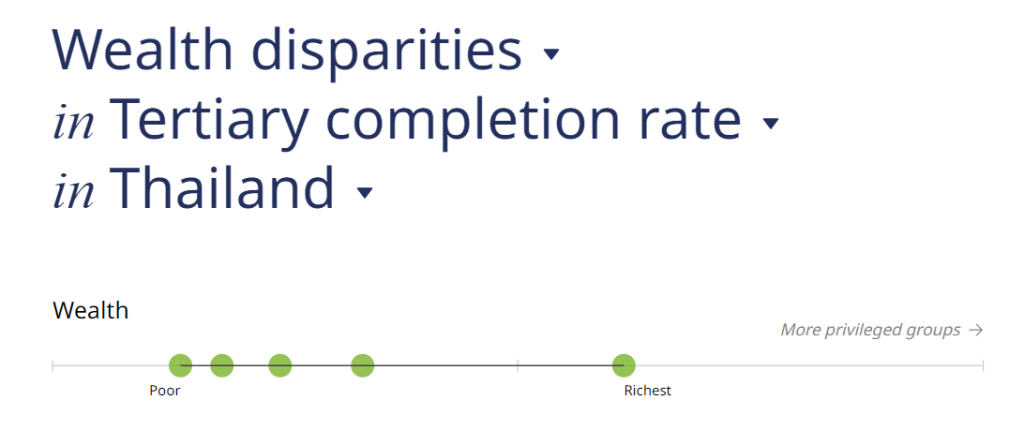
The analysis of graduation rates at Bansomdejchaopraya Rajabhat University (BSRU) reveals a notably strong performance compared to Thailand’s national averages. Across all faculties, BSRU achieved an overall graduation rate of 74.42% for the 2019 cohort, significantly higher than the national average of 31%. Graduation rates varied by faculty, with the Faculty of Management Science leading at 93.17%, followed by Humanities and Social Sciences at 79.04%, and Education at 70.82%. Even faculties with more challenging technical or artistic programs, such as Science and Technology (64.85%) and Engineering and Industrial Technology (55.21%), maintain graduation rates well above the national average. These outcomes suggest that BSRU’s academic programs, student support services, and retention efforts create an environment conducive to completion for students across all income levels.
Richest Income Group Richest Income Group Performance
Nationally, students from households earning more than 300,000 THB per year graduate at an average rate of 61%. At BSRU, this group performs at comparable or higher levels. For example, graduation rates for this group reach 77% in Management Science, 67% in Humanities and Social Sciences, and 64% in Education. Such figures indicate that wealthier students at BSRU are achieving outcomes on par with or above the national norm, benefiting from both strong academic support and the advantages associated with their economic background.
Graduation Rates for the “Middle Income” Group
For the “middle income” group — households earning 150,000–300,000 THB annually — the national graduation rate is around 33%. BSRU consistently surpasses this average across faculties. In Management Science, this group attains a graduation rate of 55%, Humanities and Social Sciences 57%, and Science and Technology 64%. These figures suggest that BSRU’s tailored support mechanisms, such as financial aid and academic counseling, effectively bolster retention and completion rates for students in this category.
Performance of the Poorest Income Group
National graduation rates for the poorest income group, with annual household incomes below 150,000 THB, average just 18%. BSRU significantly exceeds this benchmark. Across faculties, graduation rates for this group range from 46% in Education to 66% in Humanities and Social Sciences. Even in more challenging programs such as Engineering and Industrial Technology and Science and Technology, the rates remain above the national figure, demonstrating BSRU’s strong capacity to support students facing substantial economic challenges.
Low-Income Group Graduation Rates
For students with no household income — who face some of the greatest barriers to completing higher education — national graduation rates hover around 14%. At BSRU, this group achieves substantially higher outcomes, with graduation rates such as 60% in Humanities and Social Sciences, 55% in Management Science, and 46% in Education. These results underline the effectiveness of BSRU’s comprehensive support systems in enabling students with no financial resources to persist and succeed academically.
Summary
Across all income brackets, BSRU’s graduation rates surpass Thailand’s national averages, with particularly strong outcomes for students from low-income backgrounds. This achievement reflects the university’s inclusive approach to higher education, underpinned by targeted financial aid, academic guidance, and student support initiatives. While students from wealthier households perform strongly as expected, BSRU’s ability to elevate graduation rates for economically disadvantaged groups positions it as a leading example of equitable higher education in Thailand. These results demonstrate that BSRU not only promotes access to education but also effectively fosters student persistence and success across diverse socio-economic backgrounds.