
To address student success among the bottom financial quintile, we focus on analyzing the educational outcomes of students from households within the lowest 20% income bracket at Bansomdejchaopraya Rajabhat University (BSRU). Understanding the graduation rates for these students is essential to meet institutional targets aimed at improving retention and completion rates among low-income populations.
In 2023, BSRU committed to closing the graduation gap for students from financially disadvantaged backgrounds, setting measurable targets and implementing support systems for these students. Evidence of this commitment is seen in the detailed tracking of graduation rates segmented by household income, which highlights the university’s dedication to ensuring equal educational outcomes.
PDF - AAR Report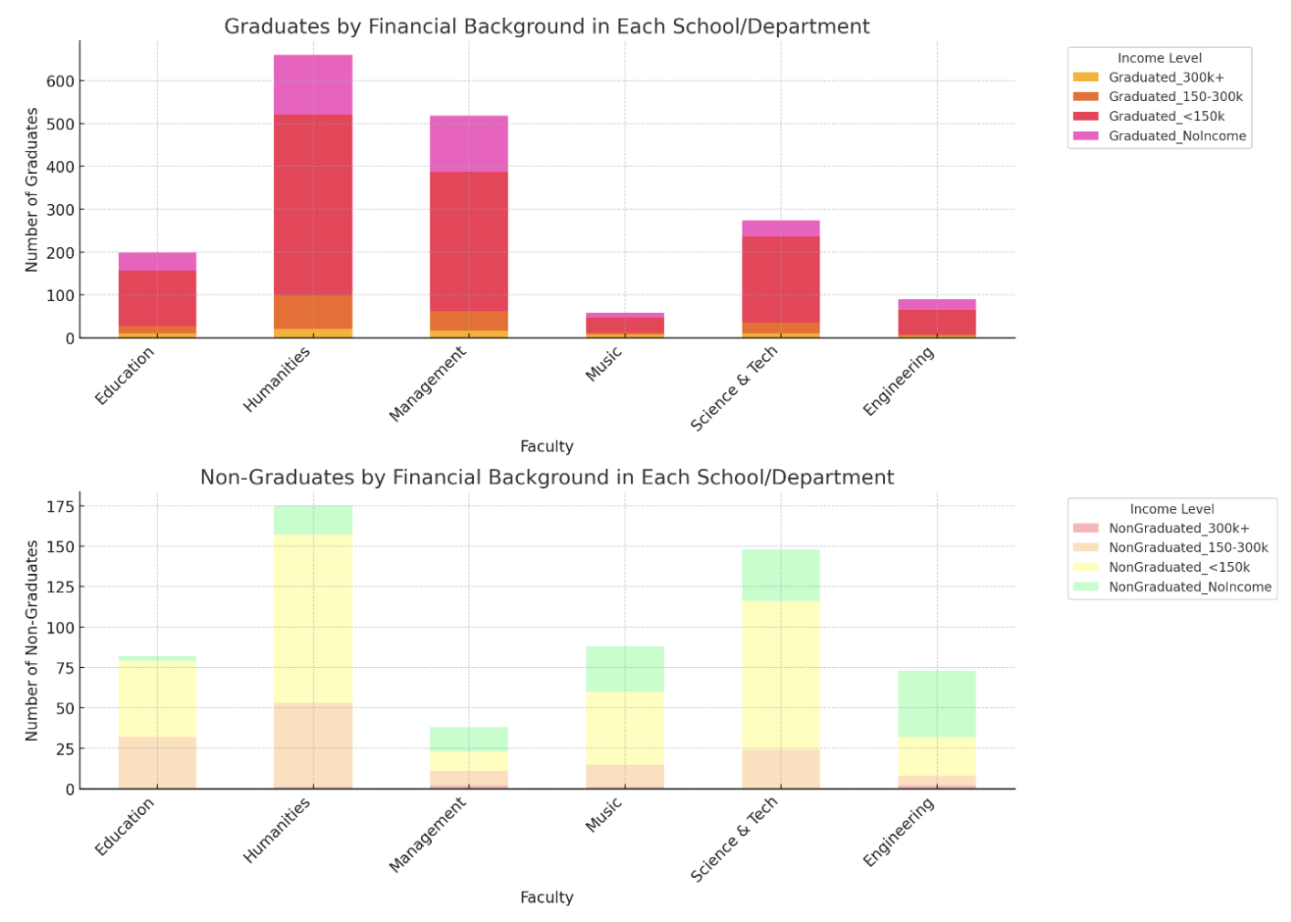
Faculty of Education
In the Education Department, the majority of graduates come from lower-income brackets. Approximately 46% (130 out of 281) of graduates report incomes below 150,000 THB per year, and 37% (103 out of 281) have incomes between 150,000-300,000 THB. Only around 8% (23 out of 281) of graduates report incomes above 300,000 THB.
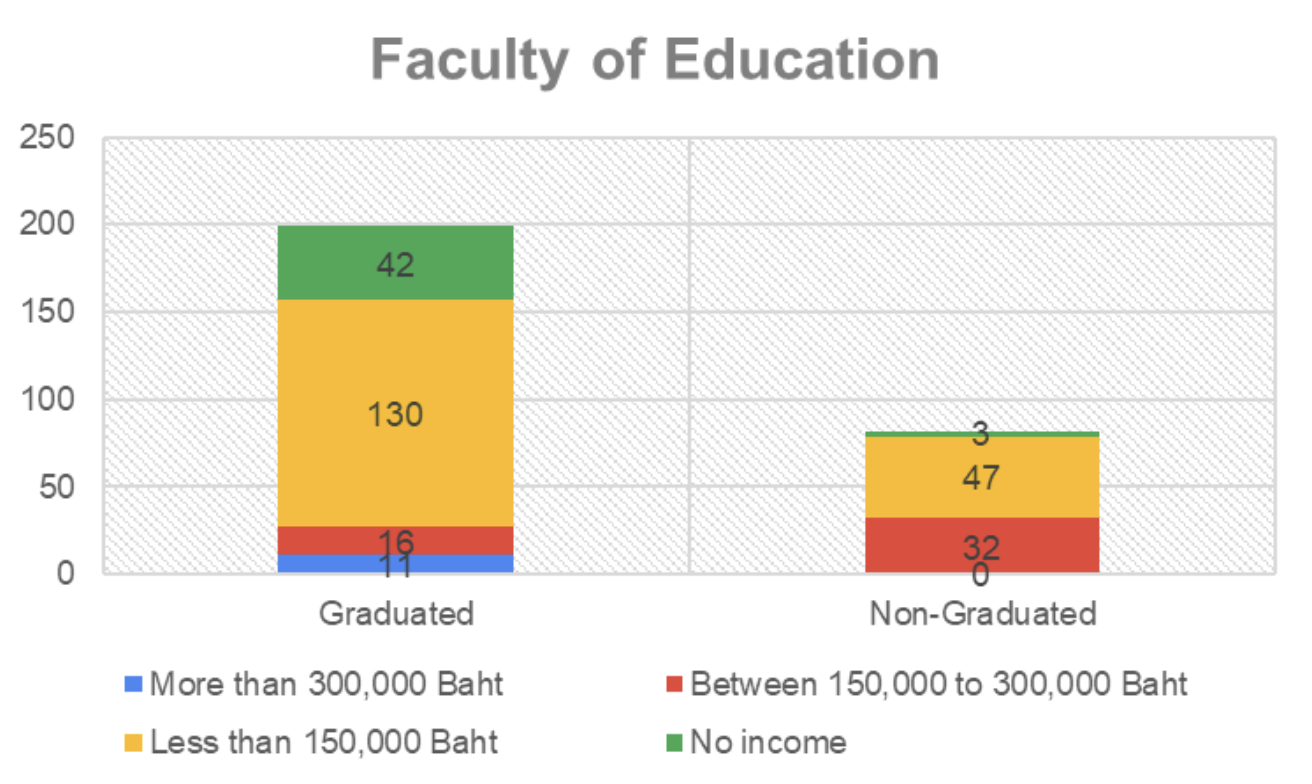
Among non-graduates in Education, there’s a similar trend: 65% (47 out of 82) come from incomes below 150,000 THB, while 39% (32 out of 82) are from the middle-income range of 150,000-300,000 THB. This shows that students from higher financial backgrounds are more likely to graduate in this department.
Humanities & Social Sciences

In Humanities and Social Sciences, the distribution leans heavily towards students with lower incomes. About 66% (548 out of 835) of graduates come from the below 150,000 THB category, with 16% (130 out of 835) from middle-income backgrounds (150,000-300,000 THB), and only 4.5% (38 out of 835) from the highest income group above 300,000 THB.
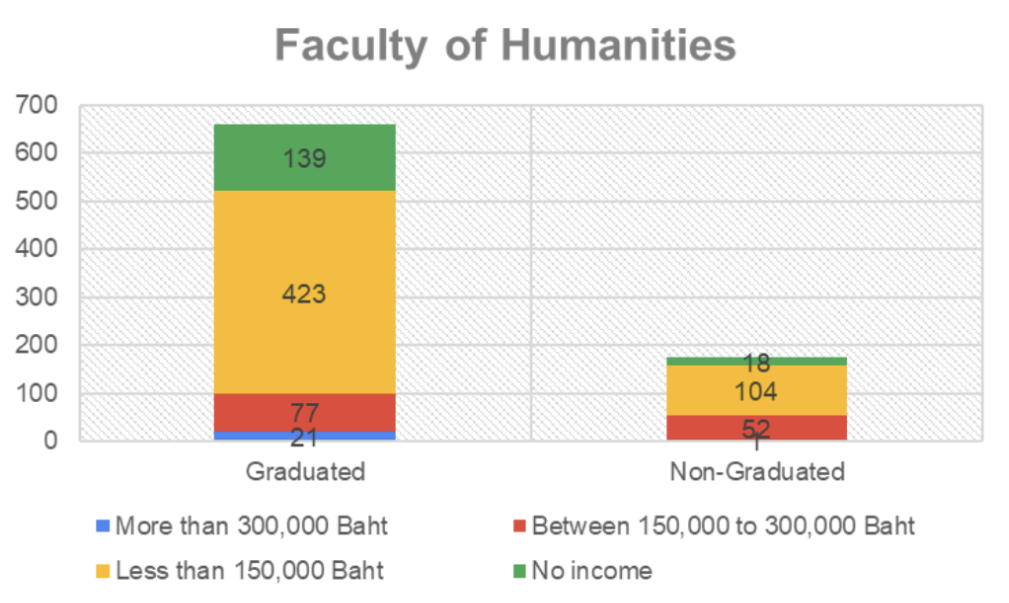
Non-graduates in Humanities also show a similar pattern, with 64% (104 out of 175) from the lowest income bracket. However, there’s a notably high presence of non-graduates from the middle-income bracket as well, at 30% (52 out of 175). These figures suggest that lower-income students do manage to graduate at high rates in this department, whereas students from higher financial backgrounds also tend to achieve more favorable graduation outcomes.
Management

Graduates in the Management Department are primarily from lower-income families, with 58% (321 out of 556) earning below 150,000 THB annually. Middle-income students (150,000-300,000 THB) comprise 12% (66 out of 556) of graduates, while around 8% (45 out of 556) come from the highest income group.
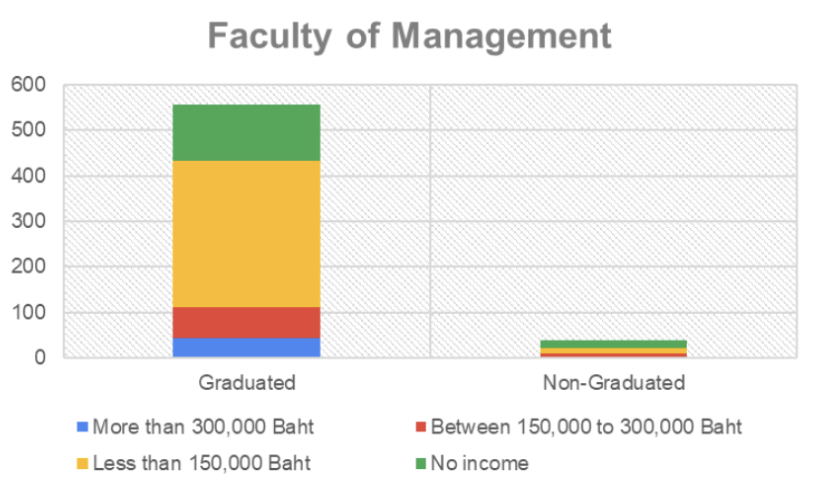
Non-graduates show similar trends, with 32% (12 out of 38) from the lowest income group. This data indicates that students with higher income are more likely to complete their education, as graduates overwhelmingly outnumber non-graduates, even within the lower-income bracket.
College of Music
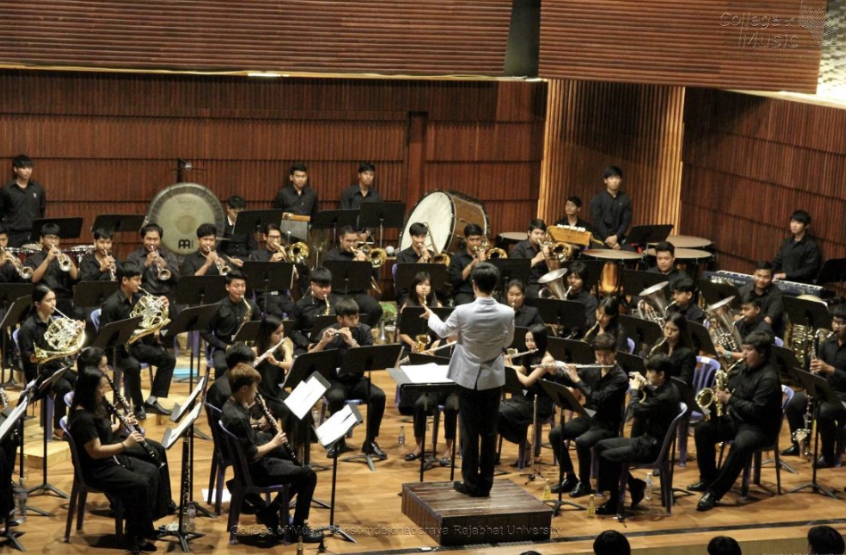
In the Music Department, most graduates (around 56% or 83 out of 147) come from the lowest income bracket (<150,000 THB), while students from the middle-income group make up 10% (15 out of 147) of graduates. Only a small number—about 4.7% (7 out of 147)—have an income above 300,000 THB.
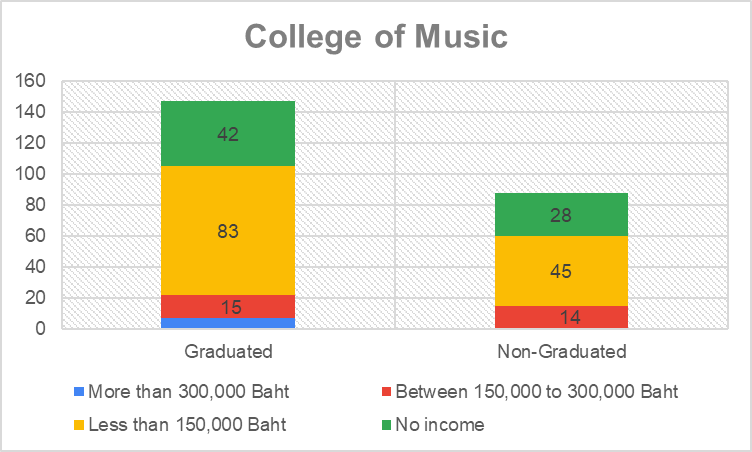
The pattern among non-graduates in Music reveals that 44% (45 out of 88) come from the lowest income bracket. Interestingly, non-graduation rates in this department are evenly spread across income levels, unlike other departments where lower-income students often dominate. This suggests that factors beyond financial background might play a significant role in students’ graduation outcomes in the Music Department.
Science & Technology
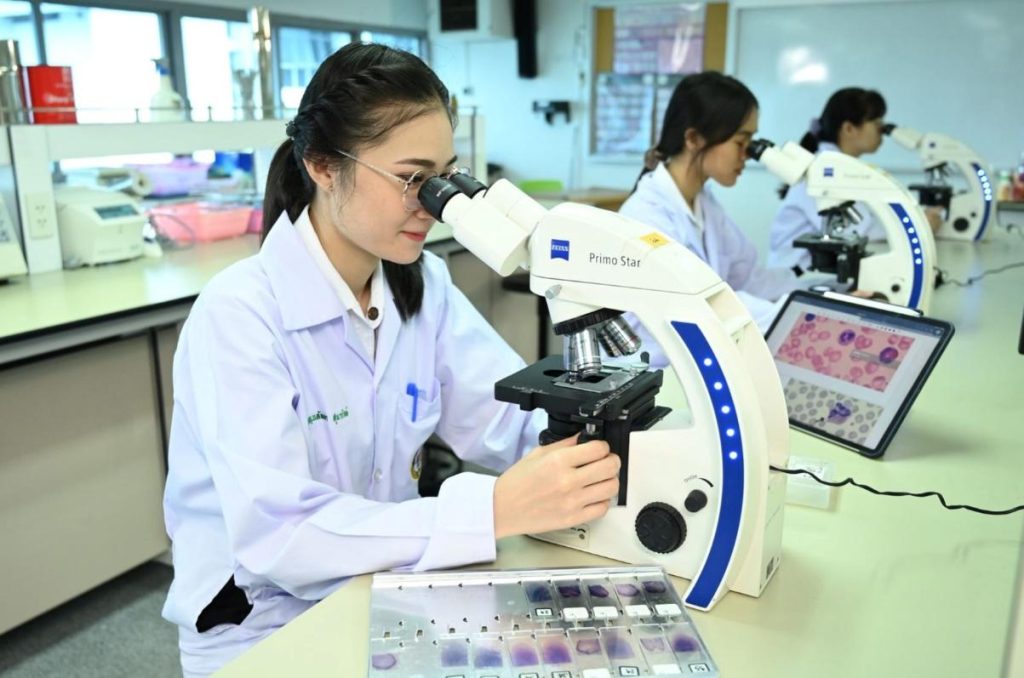
In Science and Technology, 60% (252 out of 421) of graduates come from incomes below 150,000 THB. Middle-income students account for 20% (87 out of 421) of graduates, while those from higher-income backgrounds above 300,000 THB make up 15% (65 out of 421).
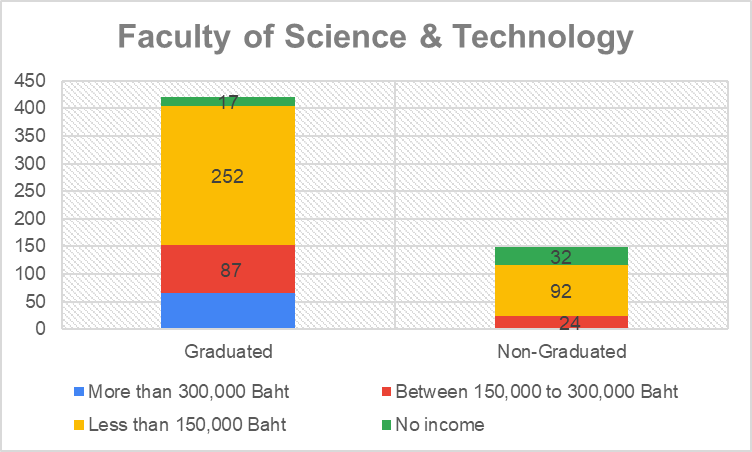
Among non-graduates, around 62% (92 out of 148) are from the lowest income group, and 20% (24 out of 148) from the middle-income group. This department sees a clear trend: students from lower and middle-income backgrounds are somewhat more likely to graduate than those with higher incomes, though the non-graduate rate is also relatively high in lower-income brackets.
Engineering & Industrial Technology

For Engineering and Industrial Technology, 48% (78 out of 163) of graduates are from the lowest income bracket, while 11% (18 out of 163) come from the middle-income range of 150,000-300,000 THB. Only 2.4% (4 out of 163) have incomes above 300,000 THB.
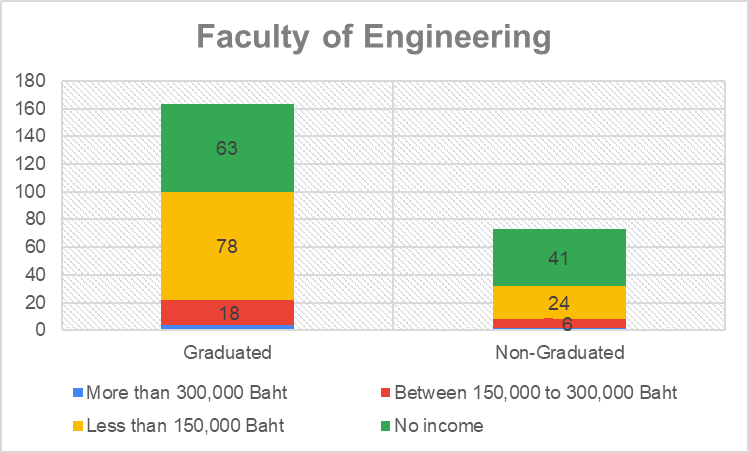
In contrast, non-graduates from this department are balanced across income groups, with 33% (24 out of 73) from the lowest income bracket and 8% (6 out of 73) from the middle-income group. This suggests that financial background may have less influence on graduation outcomes in Engineering, as both low- and middle-income students have notable non-graduation rates.
Overall Graduation Rate Comparison
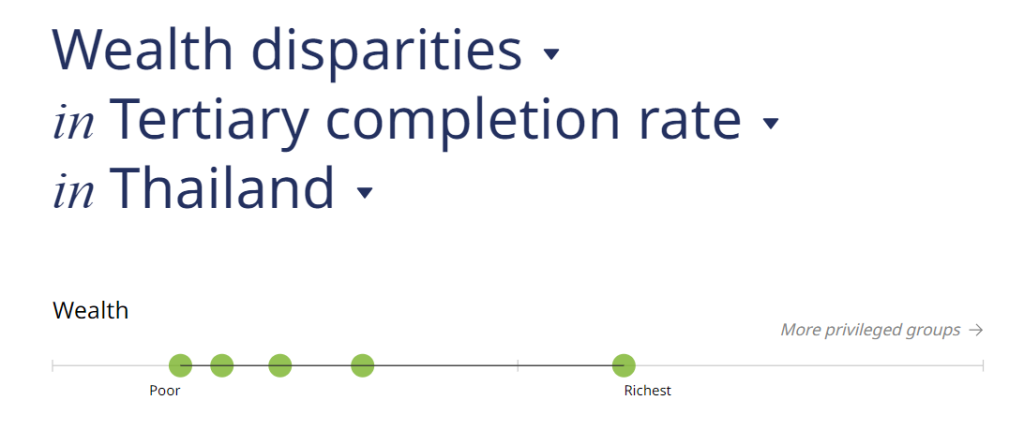
The analysis of graduation rates reveals a significant disparity between Bansomdejchaopraya Rajabhat University (BSRU) and the national averages in Thailand. Overall, the national average graduation rate stands at 31%. In contrast, BSRU’s rates across departments indicate a much higher overall graduation percentage among students from various income levels. Departments such as Education, with a graduation rate of 71%, and Science & Technology, at 67%, notably exceed the national average. This discrepancy suggests that BSRU’s programs may foster more supportive learning environments or interventions that are particularly beneficial for low-income students.
Richest Income Group Performance
When examining the richest income group, where the national graduation rate is 61%, BSRU demonstrates that students from higher-income brackets (earning more than 300,000 THB per year) graduate at rates consistent with or even surpassing this national average. This trend is especially pronounced in departments like Education and Management, indicating that wealthier students at BSRU enjoy a level of success similar to their counterparts nationwide, benefiting from ample resources and robust support networks.
Graduation Rates for the ” Middle Income ” Group
For the “rich” income group, which corresponds to an annual income of 150,000–300,000 THB, the national graduation rate is 33%. BSRU’s graduation rates for students within this category exceed the national average across several departments. For instance, Education graduates in this income group achieve approximately 36%, Humanities reach 42%, and Science & Technology graduates attain 39%. This relatively high graduation rate for the “Middle Income” group suggests that BSRU’s targeted support mechanisms effectively contribute to student success.
Performance of the Poorest Income Group
For the poorest income group, where national graduation rates are reported at 18%, BSRU achieves markedly higher graduation rates across each department. For example, graduates from the Humanities and Social Sciences department reach 66%, Management students achieve 58%, and those in Science & Technology attain 60%. This significant improvement over the national rate underscores BSRU’s effectiveness in supporting students from financially disadvantaged backgrounds, possibly as a result of university-provided resources or targeted assistance programs.
Low-Income Group Graduation Rates
Examining the graduation rates for the “poor” income group, which corresponds to national graduation rates of 14%, BSRU far exceeds this average. Low-income students at BSRU, particularly in departments such as Education (46%), Humanities (66%), and Management (58%), demonstrate much higher success rates. This ability to surpass the national average by a considerable margin highlights the effectiveness of BSRU’s financial or academic support structures in helping low-income students persist in their studies.
Summary
In summary, BSRU’s graduation rates across all income levels consistently surpass Thailand’s national averages. Notably, low-income students at BSRU achieve graduation rates that are significantly higher than the national statistics for both the “poorest” and “poor” groups. This showcases the university’s strengths in supporting economically disadvantaged students. While wealthier students at BSRU also graduate at high rates, the university demonstrates particular effectiveness in leveling the playing field for lower-income students, indicating an inclusive educational environment that meets or exceeds national success standards. Consequently, this positions BSRU as a potential leader in equitable higher education practices within Thailand.